If you hear “eat more fiber” and immediately picture a sad, beige bowl of instant oatmeal, you are not alone. For decades, oats have been the poster child for gut health. But in 2026, the narrative has shifted.
We are currently living through what industry experts are calling the “Fiber Frenzy.” Following the “Fibermaxxing” social media trend of late 2025, fiber has rebranded from a boring digestive aid to a sexy, high-performance fuel for longevity, mental clarity, and metabolic health.
Yet, despite the hype, the “Fiber Gap” remains a critical health crisis. According to recent data from the National Institutes of Health (NIH), nearly 95% of Americans still fail to meet the recommended daily intake of 25g for women and 38g for men.
This article isn’t about forcing down more porridge. It is an evidence-based roadmap to closing that gap with delicious, diverse, and nutrient-dense foods that will revolutionize your microbiome—no spoon required.
The “30 Plants a Week” Protocol: Why Diversity Trumps Quantity
For years, we focused solely on the amount of fiber. New research suggests we should be focusing on the source.
The landmark American Gut Project, a crowdsourced study that remains the gold standard in microbiome research, found that participants who ate 30 or more different plant types per week had significantly more diverse gut microbiomes than those who ate 10 or fewer.
Why Diversity Matters
Your gut is an ecosystem. If you only feed it oats and bananas, only the bacteria that like oats and bananas will thrive. By diversifying your intake, you feed a wider array of beneficial microbes.
- The Result: A resilient gut barrier, reduced inflammation, and better immune response.
- The Strategy: Don’t just count grams; count plants. Herbs, spices, nuts, seeds, and different colored vegetables all count toward your 30.
Beyond the Bowl: Top High-Fiber Superfoods for 2026
Forget the cardboard-tasting bran muffins. Here are the nutrient-dense powerhouses that are trending in nutrition circles right now.
1. The Legume Leaderboard (Nature’s Prebiotics)
Legumes are the undisputed champions of the fiber world. They are packed with resistant starch, a type of fiber that bypasses digestion and ferments in the colon, feeding your “good” bacteria.
- Lentils: The unsung hero. Just one cup of cooked lentils packs nearly 16g of fiber—that is over half the daily requirement for women.
- Chickpeas (Garbanzo Beans): offering about 12.5g per cup.
- Black Beans: Roughly 15g per cup.
Pro Tip: Canned beans are just as effective as dried. Just rinse them to remove excess sodium and phytates that can cause gas.
2. The Berry Heavyweights
Fruit often gets a bad rap for sugar, but berries are fiber-dense and low-glycemic.
- Raspberries: These are fiber giants, boasting 8g of fiber per cup. They are significantly higher in fiber than strawberries or blueberries due to their seed structure.
- Blackberries: Also coming in strong at nearly 8g per cup.
3. The “Fatty” Fiber: Avocado
Most fiber sources are carbs, but avocado is the exception. A standard avocado contains about 10-13g of fiber (depending on size) paired with heart-healthy monounsaturated fats. This combination creates high satiety, keeping you full for hours.
4. The Seed Squad
Seeds are the easiest way to “sprinkle” fiber into a diet without cooking.
- Chia Seeds: One ounce (2 tablespoons) contains a massive 10g of fiber. When mixed with liquid, they form a gel that aids in hydration and digestion.
- Flaxseeds: Rich in lignans and insoluble fiber. Note: You must grind them to access the benefits; whole flaxseeds often pass through undigested.
5. The Vegetable Underground
- Artichokes: One medium artichoke has about 7g of fiber. They are also one of the richest sources of inulin, a potent prebiotic fiber.
- Brussels Sprouts: 4g per cup.
- Broccoli: 5g per cup (chopped).
Soluble vs. Insoluble: Understanding the Dynamic Duo
To truly heal your gut, you need a balance of both main types of fiber. Think of them as the “Sponge” and the “Broom.”
| Feature | Soluble Fiber (The Sponge) | Insoluble Fiber (The Broom) |
| Action | Dissolves in water to form a gel. | Does not dissolve; adds bulk to stool. |
| Benefit | Slows digestion, stabilizes blood sugar, lowers cholesterol. | Promotes regular bowel movements, prevents constipation. |
| Top Sources | Beans, avocados, sweet potatoes, figs, flaxseeds. | Whole wheat, cauliflower, green beans, potatoes with skin. |
Expert Insight: Don’t get hung up on the ratio. If you are eating whole, unprocessed plant foods, you are naturally getting a healthy mix of both.
The Secret Weapon: Short-Chain Fatty Acids (SCFAs)
Why do we care so much about fiber? It’s not just about “staying regular.”
When your gut bacteria ferment fiber, they produce Short-Chain Fatty Acids (SCFAs), specifically Butyrate, Acetate, and Propionate.
- Butyrate is the primary fuel source for the cells lining your colon.
- It strengthens the gut barrier (preventing “leaky gut”).
- It regulates immune function and lowers colonic pH, keeping pathogens at bay.
If you don’t eat fiber, you starve your gut bacteria. When starved, these bacteria can actually start eating the mucus lining of your gut, leading to inflammation.
5 Sneaky Swaps to Boost Fiber (No Oatmeal Required)
You don’t need a total diet overhaul. Use these “micro-swaps” to increase your intake effortlessly.
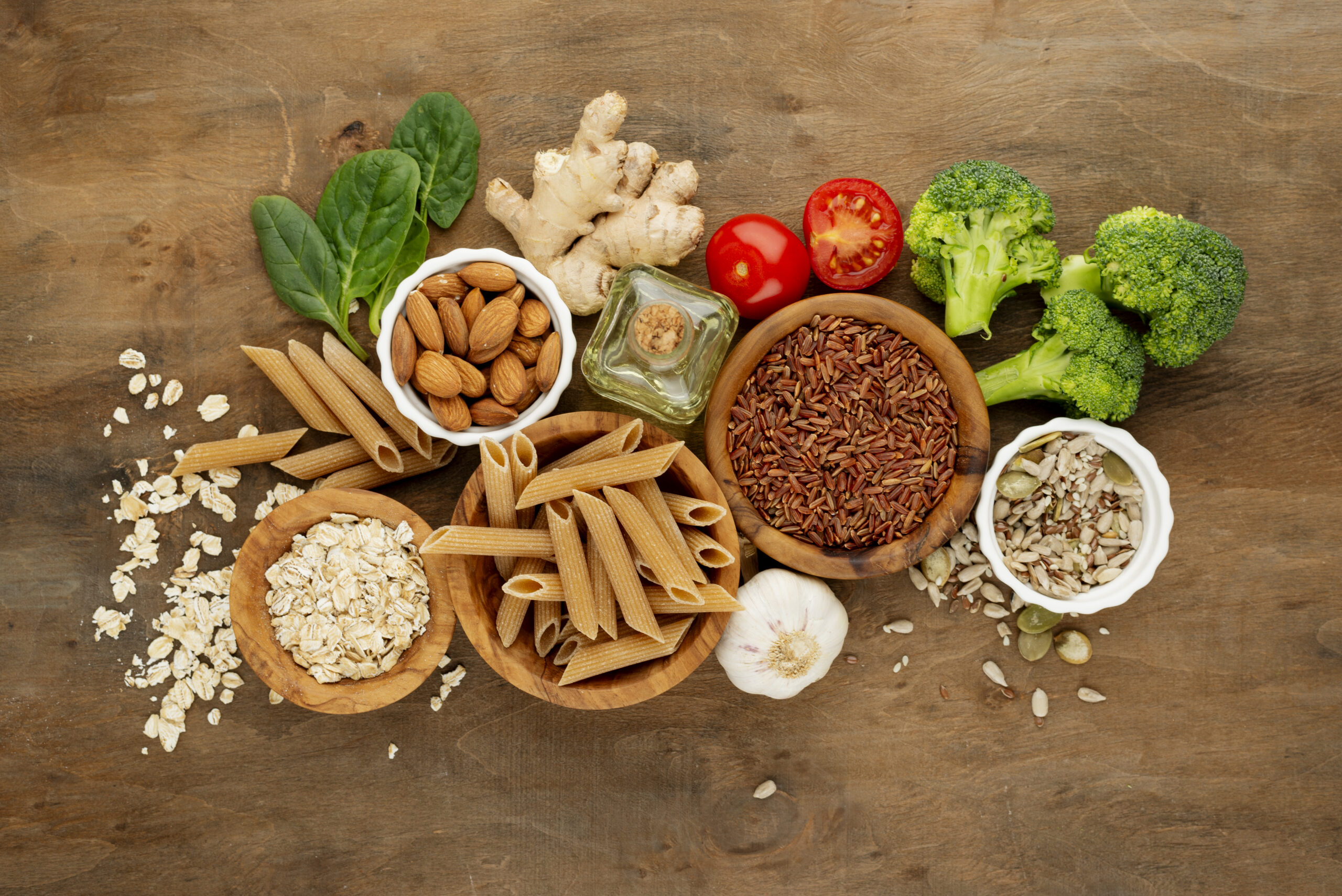
- Rice to Ancient Grains: Swap white rice for Quinoa (5g fiber/cup) or Farro (a chewy ancient wheat with rich nuttiness).
- Chips to Popcorn: Air-popped popcorn is a whole grain. 3 cups contain nearly 4g of fiber. Skip the movie theater butter and season with nutritional yeast.
- Juice to Smoothies: Juicing removes the fiber pulp. Blending keeps it. A green smoothie with spinach, chia seeds, and berries can easily hit 15g of fiber.
- Meat to Mushrooms/Beans: Replace half the ground meat in tacos or bolognese with lentils or chopped mushrooms. You boost fiber and reduce saturated fat.
- Peel On, Always: Potato skins, apple skins, and cucumber skins house the majority of the insoluble fiber. Wash them well and eat the whole fruit.
Conclusion: Start Slow, Aim High
The “Fiber Frenzy” isn’t a fad; it’s a return to human biological baselines. By diversifying your plate with legumes, berries, avocados, and seeds, you do more than just improve digestion. You feed the trillions of microbes that control your mood, metabolism, and immunity.
The Golden Rule: If you are currently eating a low-fiber diet, do not jump to 30g overnight. This will cause bloating and discomfort. Increase your intake gradually over 2-3 weeks and—crucially—increase your water intake simultaneously. Fiber needs water to move; without it, it can cause constipation.
Your gut is a garden. It’s time to start planting.
Frequently Asked Questions (FAQ)
1. Can fiber supplements replace whole foods?
While supplements like psyllium husk or methylcellulose can help with regularity, they lack the vitamins, minerals, and phytonutrients found in whole plants. They also tend to contain only one type of fiber, missing the diversity needed for a robust microbiome. Treat them as a “top-up,” not a replacement.
2. I get bloated when I eat beans. What should I do?
This is common. Your gut bacteria need time to adapt to the new fuel source.
- Start small: 1/4 cup at a time.
- Rinse canned beans: This removes excess starches that cause gas.
- Cook with Kombu: Adding seaweed to the pot can help break down gas-causing compounds.
- Chew thoroughly: Digestion begins in the mouth.
3. Is there such thing as “too much” fiber?
Yes. Exceeding 70g+ daily without working up to it can bind to minerals (like iron and zinc), preventing absorption, and cause intestinal blockages if hydration is poor. Listen to your body.
4. Does fiber help with weight loss?
Absolutely. High-fiber foods usually require more chewing and take longer to digest, signaling satiety hormones (like GLP-1) earlier. This naturally reduces overall calorie intake without the need for strict portion control.
5. What are the best fiber foods for a Keto/Low-Carb diet?
You can absolutely eat high-fiber on Keto. Focus on:
- Avocados
- Chia & Flax seeds
- Leafy greens (Spinach, Kale)
- Cruciferous vegetables (Broccoli, Cauliflower)
- Low-sugar berries (Raspberries, Blackberries)