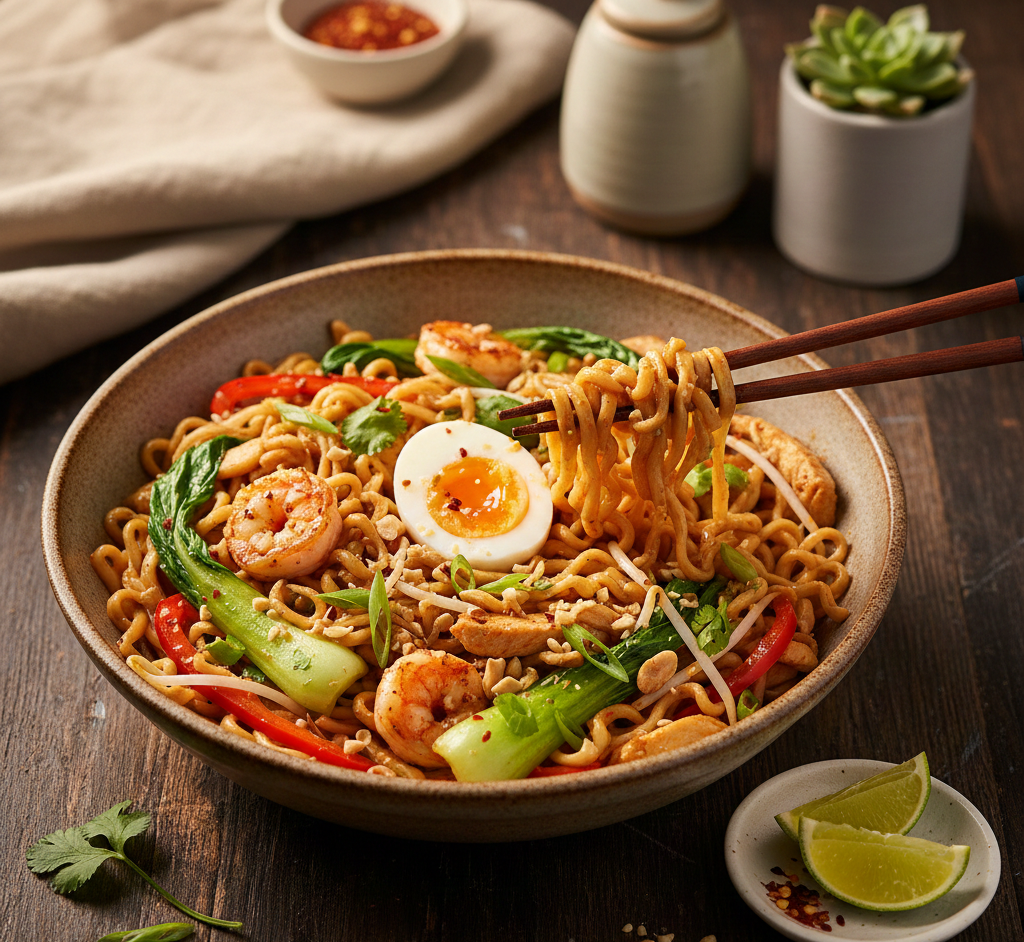
I ate my first proper bowl of pho in a place in Hanoi that had been in the same family for three generations. There were six items on the menu. The broth had been simmering since before the previous night’s service. The spice rack was a pot of fish sauce, a plate of fresh herbs, a bowl of bean sprouts, and a dish of sliced chillies. Everything required for the perfect bowl was already present, and the bowl was, in the fullest sense of the word, perfect. I’ve eaten it in many places since. None have been quite that good, though several have come close, and the attempt always teaches me something about what a bowl of pho actually is.
The idea of eating across Asia is partly logistical aspiration and partly cultural philosophy. The continent encompasses more culinary traditions than can meaningfully be aggregated under a single label — the gap between Cantonese dim sum and Hyderabadi biryani and Lao khao piak sen is larger than the gap between any of these and most European cuisines. What they share is not a flavour profile but an orientation toward flavour: intensity, depth, layering, and the deliberate contrast of competing elements.
The Flavour Architecture
Many Asian culinary traditions operate on principles different from the French classical tradition that has dominated Western fine dining. Where French cooking often works toward harmony — each element contributing to a unified, balanced whole — many South and Southeast Asian dishes deliberately maintain tension between competing elements. A Thai som tam has five clear flavour dimensions in open competition: sour (lime), salty (fish sauce and dried shrimp), sweet (palm sugar), spicy (fresh chilli), and bitter (unripe papaya). None of them wins. They coexist in productive conflict, each making you aware of the others.
Chinese regional cuisine shows the variety possible within a single culinary culture: the numbing heat of Sichuan’s “ma la” versus the delicate, barely-seasoned precision of Shanghainese cuisine versus the vinegar-forward tanginess of Shanxi cooking versus the seafood-centred freshness of Fujian. Treating “Chinese food” as a single category is like treating “European food” as a single category — technically possible but analytically useless if your goal is understanding what’s actually there.
The Ingredients That Make the Difference
Fish sauce is, to my mind, the single most transformative ingredient for anyone whose cooking has been shaped primarily by Western traditions. The fear of fish sauce is the fear of fishiness — an association that dissolves when you use it correctly, as a seasoning rather than a primary flavour. A tablespoon in a bolognese, a chicken soup, or a potato gratin adds depth and roundness that is not identifiable as fish and that no other ingredient quite produces. The umami intensity is higher than soy sauce; the salt is more complex; the fermentation adds something easier to experience than to describe.
Tamarind is the souring agent that explains the flavour of many dishes difficult to replicate without it — pad thai, Worcestershire sauce (largely tamarind-based), chutneys, rasam, Malay curries. Its fruity, complex acidity is different from vinegar, different from citrus, and irreplaceable in applications where it’s traditional. Eating your way through Asia, whether literally or through a lifelong practice of cooking from its traditions, changes how you understand flavour. It expands the register of what you consider normal intensity. Start with one dish from one tradition. Make it properly. Let it lead you somewhere you wouldn’t have otherwise gone.

One thought on “The Glorious Chaos of Eating Your Way Through Asia: A Love Letter to Bold Flavors”