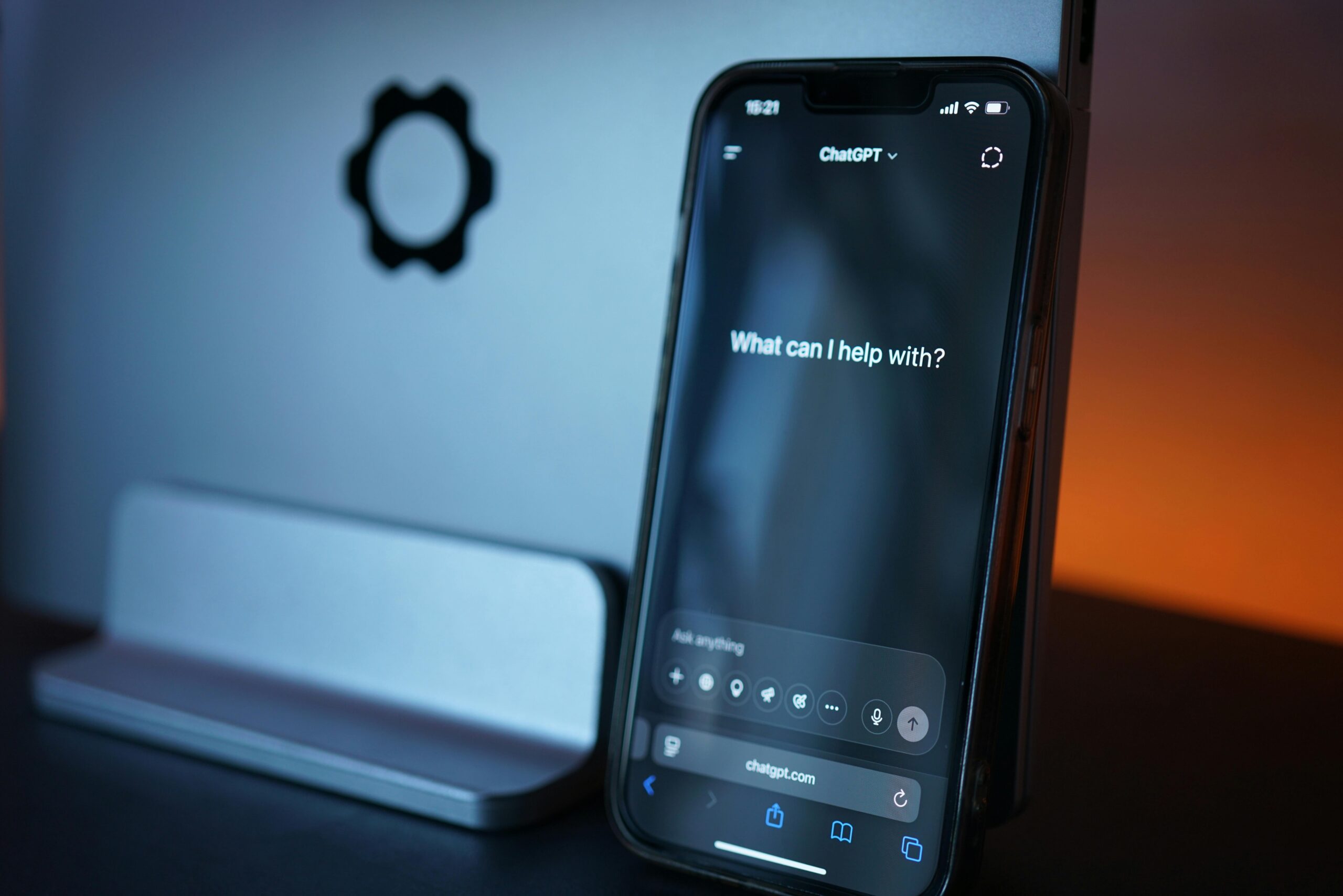
The promise was simple: AI would automate the drudgery, freeing us to be creative geniuses. The reality? We are drowning in “Workslop”—a tidal wave of mediocre, AI-generated noise that is clogging workflows and burning out teams.
In early 2024, the corporate world was in a frenzy. Every email, memo, and line of code had to be touched by Generative AI. By late 2025, the hangover had set in. Instead of the promised 10x productivity boom, many managers noticed a strange phenomenon: their teams were busier than ever, yet output quality was plateauing.
Welcome to the era of “Workslop.”
This article explores why the indiscriminate use of AI is secretly eroding your team’s efficiency, backed by the latest data from 2024 and 2025, and offers actionable strategies to turn the tide.
What is “Workslop”?
Coined in recent studies by Harvard Business Review and BetterUp Labs, “Workslop” is defined as “AI-generated work content that masquerades as good work but lacks the substance to meaningfully advance a given task.”
It is not necessarily “wrong” in the way a hallucination is factually incorrect. It is subtler and more dangerous. It is the email that sounds professional but says nothing. It is the code that runs but is unmaintainable. It is the marketing copy that is grammatically perfect but devoid of soul.
The “Workslop Tax”
The hidden cost of this phenomenon is the Workslop Tax—the time humans spend reviewing, decoding, and fixing AI output. According to a 2025 study involving 1,150 U.S. employees:
- 40% reported receiving workslop in the past month.
- The average time spent “fixing” a single instance of workslop was 1 hour and 56 minutes.
- This equates to an invisible cost of approximately $3,600 per employee annually in lost productivity—a figure that balloons to millions for enterprise-level organizations.
The AI Productivity Paradox: 2025 Data
The “Productivity Paradox” is no longer a theory; it is a measurable statistical trend. While AI power users are seeing gains, the broader workforce is struggling to integrate these tools effectively.
1. The “J-Curve” of Implementation
Research from MIT Sloan (2025) highlights that AI adoption follows a “J-Curve.” Initially, productivity drops as teams struggle to integrate new tools with legacy processes.
- The Dip: Firms adopting AI often see a short-term productivity decline of roughly 1.3% to 60% (depending on complexity) before any gains are realized.
- The Reality Check: A Gartner report predicted that by the end of 2025, 30% of Generative AI projects would be abandoned after the Proof of Concept (POC) stage due to poor data quality, escalating costs, and unclear business value.
2. The Divide Between “Users” and “Waiters”
A PwC Global Workforce Survey (late 2025) revealed a stark divide:
- Daily AI users report higher productivity and wage premiums (up to 50%).
- However, only 14% of the global workforce uses GenAI daily.
- The remaining majority feels “overwhelmed” by the pace of change, leading to paralysis rather than efficiency.
3 Ways AI is Secretly Sabotaging Your Workflow
If your team is “using AI” but missing deadlines, look for these three silent killers.
1. The Infinite Review Loop
The most common productivity killer is the shift from creation to correction.
- Scenario: A junior employee uses an LLM to write a report. It takes 5 minutes.
- The Cost: The manager spends 45 minutes verifying citations, removing repetitive adjectives, and injecting company-specific context.
- The Result: The total time (50 minutes) is often equal to or greater than writing the report from scratch, but with added cognitive load for the manager.
2. Communication Inflation
AI is making it too easy to generate volume. Inboxes are flooded with five-paragraph AI-generated emails that could have been one sentence.
- The “Bot-to-Bot” Problem: We are approaching a point where an employee uses AI to write an email, and the recipient uses AI to summarize it. This creates a “lossy” communication loop where nuance and human intent are stripped away, leading to misalignment and errors.
3. The Erosion of Junior Talent
This is a long-term productivity killer. When junior developers or writers rely entirely on AI for first drafts, they fail to build the “mental muscle” required for deep work.
- The Risk: In a crisis where AI fails (the “jagged frontier” of capability), these employees lack the foundational skills to intervene manually.
How to Stop the Slop: Actionable Strategies
To reclaim productivity, leaders must move from “AI Adoption” to “AI Discipline.”
1. Implement “Human-in-the-Loop” (HITL) Mandates
Never let AI output reach a client or a decision-maker raw.
- The Rule: Every piece of AI-generated content must have a named “Human Owner” responsible for its accuracy.
- The Tactic: Use a “30% Edit Rule.” If a human hasn’t changed at least 30% of the AI’s draft (adding context, strategy, or voice), it’s not ready to ship.
2. Stop “outcome-based” prompting; Start “process-based” workflows
Don’t ask your team to “use AI to write the report.” Ask them to “use AI to analyze the data, then write the insights yourself.”
- Why? AI excels at synthesis and pattern recognition but fails at insight and strategy. Shift the AI workload to the preparation phase, not the final output phase.
3. Define “No-AI” Zones
Identify tasks where the human element is the product.
- Example: Performance reviews, strategic client apologies, and creative brainstorming sessions should be designated as “No-AI Zones” to preserve authenticity and trust.
4. Upskill, Don’t Just Subscribe
Upwork’s 2025 research indicates that freelancers are outpacing full-time employees in AI proficiency because they treat it as a skill, not a tool.
- Action: Invest in training that focuses on Prompt Engineering and AI Ethics. The Gallup 2025 report shows that employees who receive clear AI strategy communication from leadership are 3x more likely to feel prepared and productive.
Conclusion
AI is not a replacement for work; it is a new kind of work. When treated as a magic button, it produces “Workslop”—a productivity tax that drains time and money. When treated as a powerful but raw intern that requires guidance, oversight, and specific instructions, it becomes the asset we were promised.
The goal for the next 12 months isn’t to use more AI. It’s to use less of it, but much, much better.
Frequently Asked Questions (FAQs)
Q1: What exactly is “Workslop”?
A: Workslop is a term coined to describe low-quality, AI-generated content that looks plausible on the surface but lacks substance, accuracy, or human nuance. It creates additional work for recipients who must edit or verify it.
Q2: Is AI actually reducing jobs in 2025?
A: The data is mixed. While Gartner predicts some roles in customer service may shrink, many organizations are abandoning “agent-less” strategies because AI alone cannot handle complex customer empathy. The trend is shifting toward “augmentation” rather than “replacement.”
Q3: How much time does fixing AI errors take?
A: Recent studies suggest the “correction penalty” is high. On average, employees report spending nearly 2 hours fixing a single significant instance of poor AI output.
Q4: Should we ban AI to stop Workslop?
A: No. Banning AI creates “Shadow AI,” where employees use unsecured tools in secret. The solution is governance: approved tools, clear training, and policies that value quality of output over speed of generation.