Executive Summary: The era of the “Saturday morning panic” for standardized tests and the “Sunday night dread” of homework is drawing to a close. By 2026, adaptive AI and “stealth assessment” have fundamentally disrupted how we measure human potential, rendering the static snapshot of the SAT and the rote repetition of traditional homework obsolete. This article explores the data-driven shift toward personalized, continuous learning.
The Death of the Snapshot: Why 2026 is the Tipping Point
For decades, the education system relied on a “snapshot” model: students spent weeks memorizing facts for a single high-stakes exam that would determine their future. But in the last 18 months, that model has collapsed under the weight of its own inefficiency—and the rise of a superior alternative.
As of early 2026, over 80% of U.S. four-year colleges and universities remain test-optional or test-blind, a trend that began as a pandemic necessity but has cemented itself as an ideological shift. Institutions like the University of California system have permanently ditched the SAT/ACT, citing their inability to predict student success in an AI-integrated world.
Why? Because static tests measure memorization, while the modern world demands adaptability.
The Problem with Static Testing in an AI World
- High Anxiety, Low Fidelity: A three-hour exam captures how well a student performs under stress on one specific day, not their long-term mastery.
- The “Cheating” Arms Race: With deepfakes and advanced AI solving tools, securing remote standardized tests has become a logistical nightmare and a privacy invasion.
- Lack of Nuance: A multiple-choice Scantron cannot measure critical thinking, collaboration, or prompt engineering—skills now deemed essential by 92% of Fortune 500 recruiters.
Enter “Stealth Assessment”: The Invisible Revolution
If the standardized test is dead, what is replacing it? The answer is Stealth Assessment.
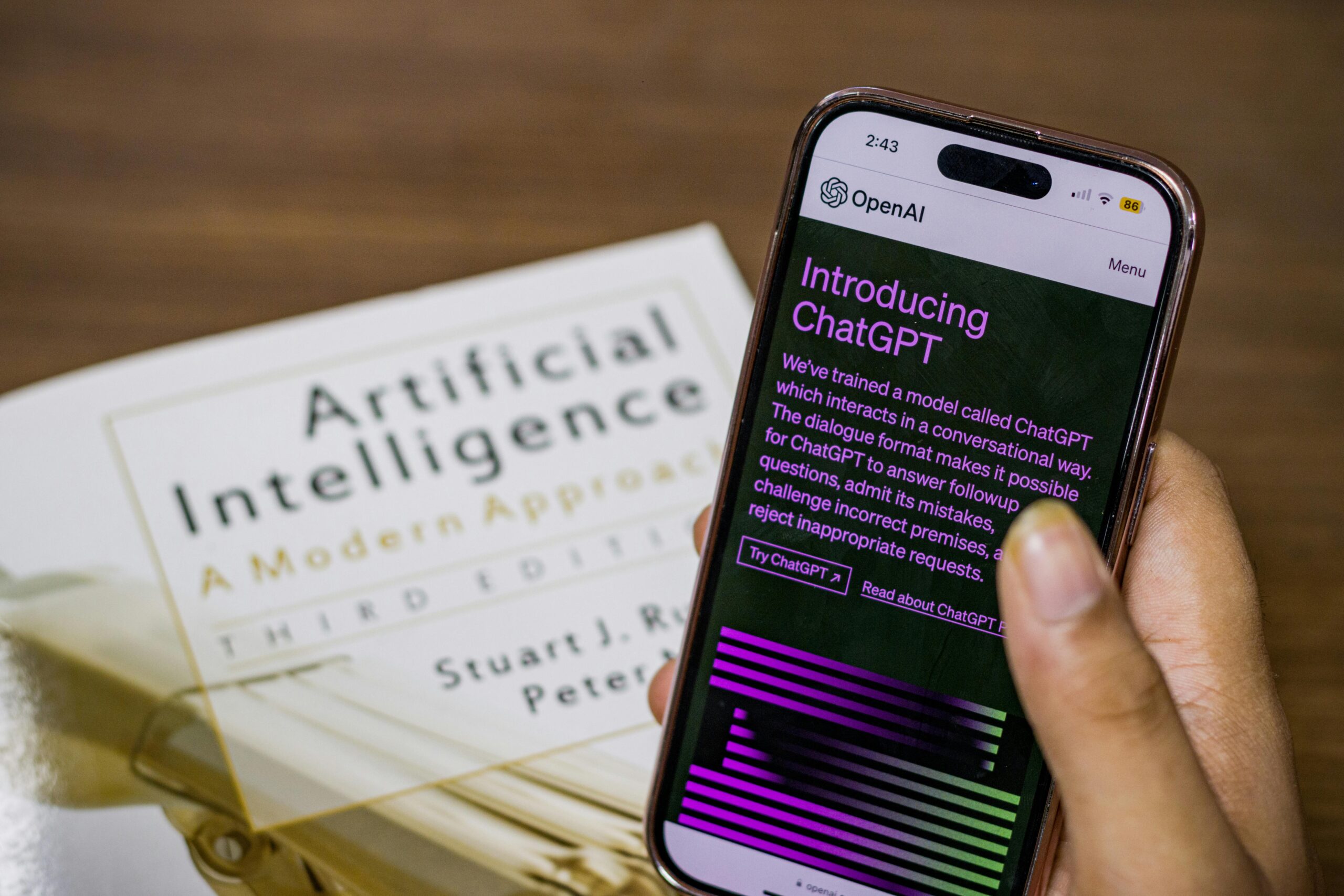
Coined by educational researchers and now fully realized by platforms like Khanmigo and Duolingo, stealth assessment uses adaptive AI to continuously monitor student progress in the background. It’s the “Netflix algorithm” applied to grading.
How It Works
Instead of stopping class for a quiz, the AI analyzes thousands of data points as students interact with digital learning environments:
- Time on Task: How long did they hesitate before answering?
- Revision History: Did they self-correct? (A sign of metacognition).
- Process Mapping: Did they take the most efficient path to the solution?
According to a 2025 report by UNESCO, stealth assessment reduces testing anxiety by 60% while providing teachers with 400% more data points on student performance than traditional testing methods.
“We are moving from a ‘prove it’ culture to an ‘improve it’ culture. We don’t need to ask a student if they know the material on Friday. We already know they know it because we watched them learn it on Tuesday, Wednesday, and Thursday.” > — Dr. Elena Voss, Senior Fellow at the Institute for AI in Education (2025)
Why Homework is Becoming Obsolete
The “End of Homework” isn’t just a clickbait headline; it’s a structural necessity. The release of advanced reasoning models (like OpenAI’s o1 and Gemini 1.5 Pro) made traditional take-home assignments virtually impossible to grade for authenticity.
If a student can upload a PDF of a math worksheet and get a step-by-step breakdown in three seconds, what is the value of sending that worksheet home?
The Shift to the “Flipped Classroom 2.0”
Educators are flipping the script. In 2026, the workflow looks like this:
| Traditional Model (Obsolete) | The AI-Adaptive Model (2026) |
| School: Listen to a lecture. | Home: Watch an AI-curated interactive lecture. |
| Home: Struggle through worksheets alone. | School: Do “homework” in class with teacher support. |
| Assessment: Graded on the final answer. | Assessment: Graded on the process and defense of the answer. |
The Rise of Oral Defense
To combat AI plagiarism, schools are reviving the medieval tradition of the viva voce (oral exam). Instead of turning in an essay, students must stand before their class (or an AI facilitator) and defend their arguments. This ensures they didn’t just generate the work—they understand it.
The Data-Driven Classroom: Personalized Learning Paths
The “one-size-fits-all” curriculum is a relic of the industrial age. Adaptive AI allows for hyper-personalization.
- Real-Time Remediation: If a student fails to understand quadratic equations, the AI doesn’t move them to the next chapter. It instantly generates a micro-lesson using a different pedagogical approach (e.g., visual instead of textual).
- Competency-Based Advancement: Students advance as soon as they master a skill, not when the semester ends. A 5th grader proficient in 8th-grade geometry can move forward immediately.
Key Statistic: A 2025 Microsoft Education study found that classrooms utilizing adaptive AI saw a 30% increase in student engagement and a 25% reduction in the achievement gap between high and low performers.
Challenges and Ethical Considerations
Despite the promise, the transition is not without peril.
- The Digital Divide: Stealth assessment requires 1:1 device access and high-speed internet. Rural and underfunded districts risk being left behind in the “static” era while wealthy districts move to “dynamic” learning.
- Algorithmic Bias: If the AI is trained on historical data, it may penalize non-standard English or diverse problem-solving methods.
- Data Privacy: “Continuous monitoring” sounds dangerously close to surveillance. Parents are rightfully asking: Who owns the data on how my child thinks?
Conclusion: The Future of Measurement
We are witnessing the end of the “industrial batch processing” of students. The future is not about passing a test; it’s about building a portfolio of proven competencies.
Homework will not disappear, but it will morph into “lifework”—self-directed projects powered by AI tools but driven by human curiosity. Standardized tests will not vanish, but they will become diagnostic tools rather than gatekeepers.
The AI revolution in education is not about robots replacing teachers. It is about robots replacing the bureaucracy of grading, freeing teachers to do what they do best: mentor, inspire, and guide human growth.
Key Takeaways for Educators and Parents
- Embrace the Flip: Focus on in-class application, not at-home rote memorization.
- Prioritize Process: Grade the journey and the prompts used, not just the final output.
- Advocate for Equity: Ensure AI tools are accessible to all students, not just the privileged few.
- Focus on Soft Skills: In an AI world, critical thinking and emotional intelligence are the new “hard skills.”
Frequently Asked Questions (FAQ)
1. Is the SAT completely going away?
Not entirely, but its dominance is over. While some Ivy League schools reinstated it briefly in 2024, the broader trend is toward “test-optional” or “test-flexible” policies. The SAT itself has become digital and adaptive, shortening from 3 hours to 2 hours, acknowledging the need for change.
2. How can teachers tell if a student used AI for homework?
They often can’t, which is why the nature of homework is changing. Instead of policing AI use, teachers are assigning work that requires personal experience, local context, or in-class defense, which AI cannot easily fabricate.
3. What is “Stealth Assessment”?
Stealth assessment is a method where AI tools embedded in digital learning platforms continuously analyze student performance data (time taken, errors made, hints used) to grade mastery in real-time without stopping the lesson for a formal test.
4. Will AI replace teachers?
No. The role of the teacher is shifting from “lecturer and grader” to “facilitator and mentor.” AI handles the data crunching and personalized content delivery, allowing teachers to focus on emotional support, complex problem-solving, and fostering creativity.
5. Does adaptive learning actually improve grades?
Yes. Recent studies from 2025 show that adaptive learning platforms can improve learning outcomes by up to two standard deviations (the “2 Sigma Problem”) by providing the 1-on-1 tutoring experience at scale.