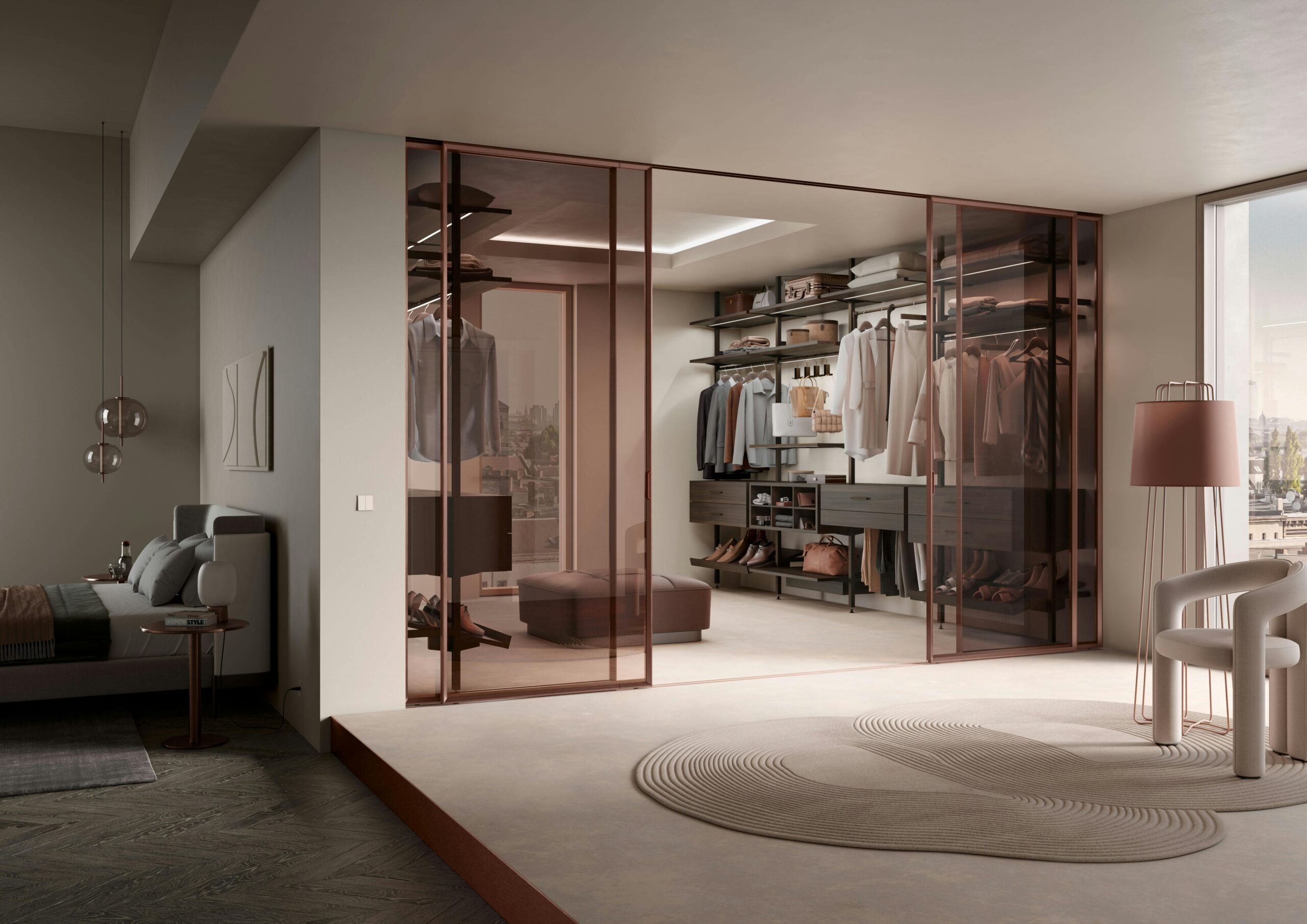
Imagine your closet not as a storage unit, but as a high-performance building. In architecture, structural integrity ensures a building stands tall, functions efficiently, and weathers the elements. In fashion, Wardrobe Architecture applies these same principles to your clothing. It is the practice of building a closet based on Structural Precision—a method that values geometry, functionality, and intentional design over impulsive accumulation.
Why does this matter? A cluttered, structureless wardrobe leads to “decision fatigue,” a psychological phenomenon where the sheer volume of choices depletes your mental energy before the day even begins. Conversely, a precision-built wardrobe acts as a personal infrastructure, supporting your daily life with efficiency and style.
In this guide, we will dismantle the chaotic “fast fashion” mindset and rebuild your closet using architectural principles, backed by 2025/2026 trends and data.
What is Wardrobe Architecture?
Wardrobe Architecture is a strategic approach to personal style that treats your closet as a curated ecosystem rather than a collection of disparate items. It moves beyond the buzzword of “minimalism” and focuses on engineering.
Just as an architect considers the load-bearing capacity of a beam, a Wardrobe Architect considers the “load-bearing” pieces of a closet—the daily drivers that support the rest of the outfit. It relies on the concept of Structural Precision: the exact balance between utility (function) and aesthetics (form).
The Shift from “More” to “Better”
Recent industry data confirms a seismic shift in consumer behavior. According to 2025 market analysis, the capsule wardrobe market is projected to grow at a CAGR of 15% through 2033. This isn’t just a trend; it’s a movement toward “Quiet Luxury” and sustainable living, where the focus is on garment construction, fabric quality, and longevity rather than logo-mania.
The 4 Pillars of Structural Precision
To build a wardrobe with structural precision, you must adhere to four foundational pillars. These act as the blueprints for your new closet.
1. The Foundation: The “Load-Bearing” Basics
Every structure needs a solid foundation. In your closet, these are your “Core” items—neutral, high-quality pieces that anchor every outfit.
- The Rule: Your foundation should make up 70% of your wardrobe.
- Examples: A perfectly tailored blazer, structural denim, a crisp white button-down, and leather boots.
- 2025 Insight: The trend for 2025 is “soft tailoring”—structured pieces that offer movement, moving away from the rigid power suits of the past decade.
2. Zoning and Flow: The Floor Plan
An architect wouldn’t put a kitchen in the bedroom. Similarly, your closet needs “zoning” to ensure efficient flow.
- Active Zone: The prime real estate (eye level to waist height). This contains items you wear 80% of the time.
- Passive Zone: High shelves or back corners. Reserved for out-of-season wear or formal attire.
- The “Golden Mean”: Arrange items by visual weight. Heavy coats on the left, lighter shirts on the right. This creates a sense of visual balance known in design as the “Golden Mean.”
3. Material Integrity: The “Biophilic” Touch
In 2025, “Biophilic Design”—bringing the outdoors in—has crossed over from interior design to fashion. Structural precision requires materials that breathe and last.
- Avoid: Synthetics that pill and lose shape (the “drywall” of fashion).
- Embrace: Natural fibers like wool, organic cotton, and linen (the “marble and oak” of fashion).
- Stat: Sustainable fashion reports from 2024 indicate a 57% increase in consumers prioritizing material durability over trendiness.
4. Smart Integration: The Digital Layer
A modern building is smart; your closet should be too. The “Digital Wardrobe” is no longer sci-fi.
- Tech Trend: Apps like Cladwell and Stylebook have seen massive updates in 2025, using AI to suggest outfits from your existing inventory.
- Smart Closets: The smart closet market is valued at $2.8 billion in 2025, with innovations like automated lighting and humidity control to preserve fabrics.
The Economics of a Precision Wardrobe: Cost Per Wear (CPW)
One of the strongest arguments for Wardrobe Architecture is economic. We measure value not by the price tag, but by Cost Per Wear (CPW).
The “Fast Fashion” Trap:
- Item: Trendy Polyester Top
- Cost: $30
- Wears: 3 (before it loses shape or trend fades)
- CPW: $10.00
The “Structural” Investment:
- Item: High-Quality Wool Blazer
- Cost: $300
- Wears: 100 (over 3 years)
- CPW: $3.00
Takeaway: A higher upfront investment often yields a significantly lower long-term cost, provided the item has “structural integrity.”
Step-by-Step Guide to Building Your Structural Closet
Ready to break ground? Follow this demolition and construction plan.
Phase 1: Demolition (The Audit)
You cannot build on a shaky foundation.
- Empty the Space: Remove every single item.
- The Integrity Test: Check every garment. Is the stitching straight? Is the fabric pilling? If it’s structurally unsound, it goes.
- The “Fit” Metric: Does it fit the current you? “Aspirational” clothing (clothes that don’t fit yet) clutters your mental space. Store them elsewhere.
Phase 2: The Blueprint (The Plan)
Define your “Uniform.”
- Identify 3 adjectives that define your style (e.g., “Sharp, Neutral, Functional”).
- Create a color palette. Stick to 3 neutrals (Black, Beige, Navy) and 2 accents (e.g., Olive Green, Terracotta).
Phase 3: Construction (The Rebuild)
- Invest in Hardware: Replace mismatched plastic hangers with uniform wooden or velvet hangers. This instantly creates visual order.
- Group by Category, Then Color: Hang pants together, shirts together. Within those groups, organize from light to dark.
- Install Lighting: If your closet is dark, add motion-sensor LED strips. You cannot wear what you cannot see.
Future-Proofing: Trends to Watch (2025-2026)
To ensure your wardrobe architecture remains relevant, keep these emerging trends in mind:
| Trend | Description | Actionable Tip |
| Hybrid Storage | Blending open rails (for display) with closed drawers (for privacy). | Use open rails for your weekly “capsule” to reduce morning stress. |
| Circular Fashion | Designing with resale in mind. | Keep original tags/buttons for high-value items to maximize resale value later. |
| Utility Aesthetics | The return of pockets, belts, and functional hardware (Prada SS26). | Look for cargo trousers or belted trench coats that merge style with utility. |
Conclusion
Wardrobe Architecture is not about deprivation; it is about curation. By applying the principles of structural precision—solid foundations, efficient zoning, and material integrity—you transform your closet from a source of stress into a tool for success.
A precision-built wardrobe saves you money (lower CPW), saves you time (easier decision-making), and ensures that every time you step out the door, you are presenting the most structured, capable version of yourself.
Your Next Step:
This weekend, perform the “Hanger Test.” Turn all your hangers backward. After you wear an item, return it to the closet with the hanger facing forward. In 30 days, any hanger still facing backward is “dead weight” in your architecture—remove it.
Frequently Asked Questions (FAQ)
1. What is the difference between a capsule wardrobe and Wardrobe Architecture?
A capsule wardrobe is a type of collection (usually 30-40 items). Wardrobe Architecture is the methodology and design philosophy used to build and organize that collection, focusing on flow, structure, and material integrity.
2. Is Wardrobe Architecture expensive to implement?
Not necessarily. While it encourages investing in high-quality staples, the first step is auditing what you already own. You likely have “load-bearing” pieces hidden amongst the clutter. The cost comes from upgrading specific items over time, which pays off via a lower Cost Per Wear.
3. How do I maintain a structural wardrobe with changing fashion trends?
The “70/30 Rule” protects you. Keep 70% of your closet as timeless, structural foundations. Use the remaining 30% for seasonal trends or accents. This maintains the integrity of your wardrobe while allowing for flexibility.
4. What are the best hangers for a precision closet?
For structural precision, use wooden hangers for coats and suits (to maintain shoulder shape) and slim velvet hangers for shirts and blouses (to maximize space and prevent slipping). Avoid wire hangers at all costs—they distort garment structure.
5. Can digital apps really help manage a physical wardrobe?
Yes. Apps like Indyx, Whering, or Cladwell digitize your inventory, allowing you to “build” outfits on your phone during your commute. This prevents rummaging and helps you identify gaps in your wardrobe architecture before you shop.