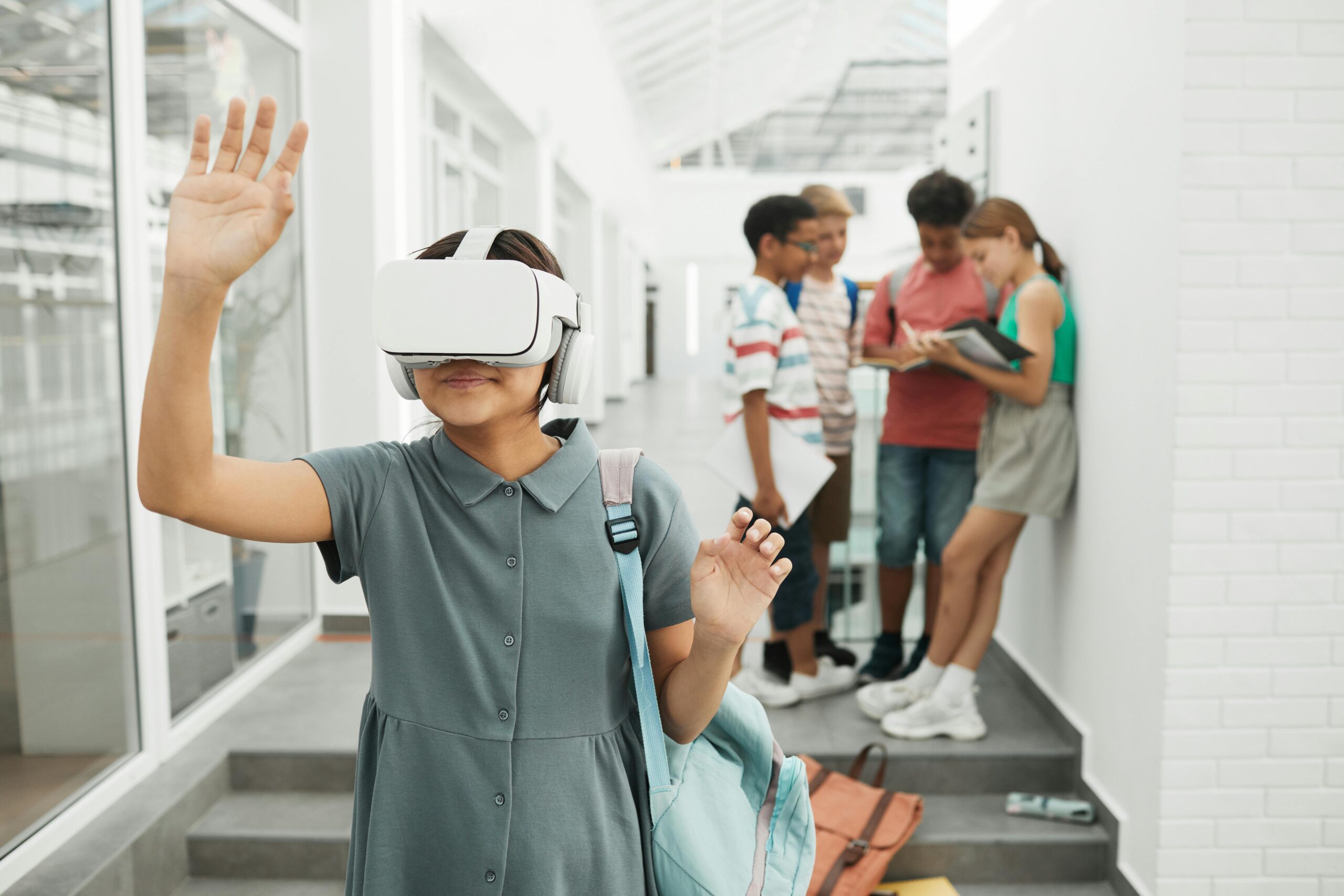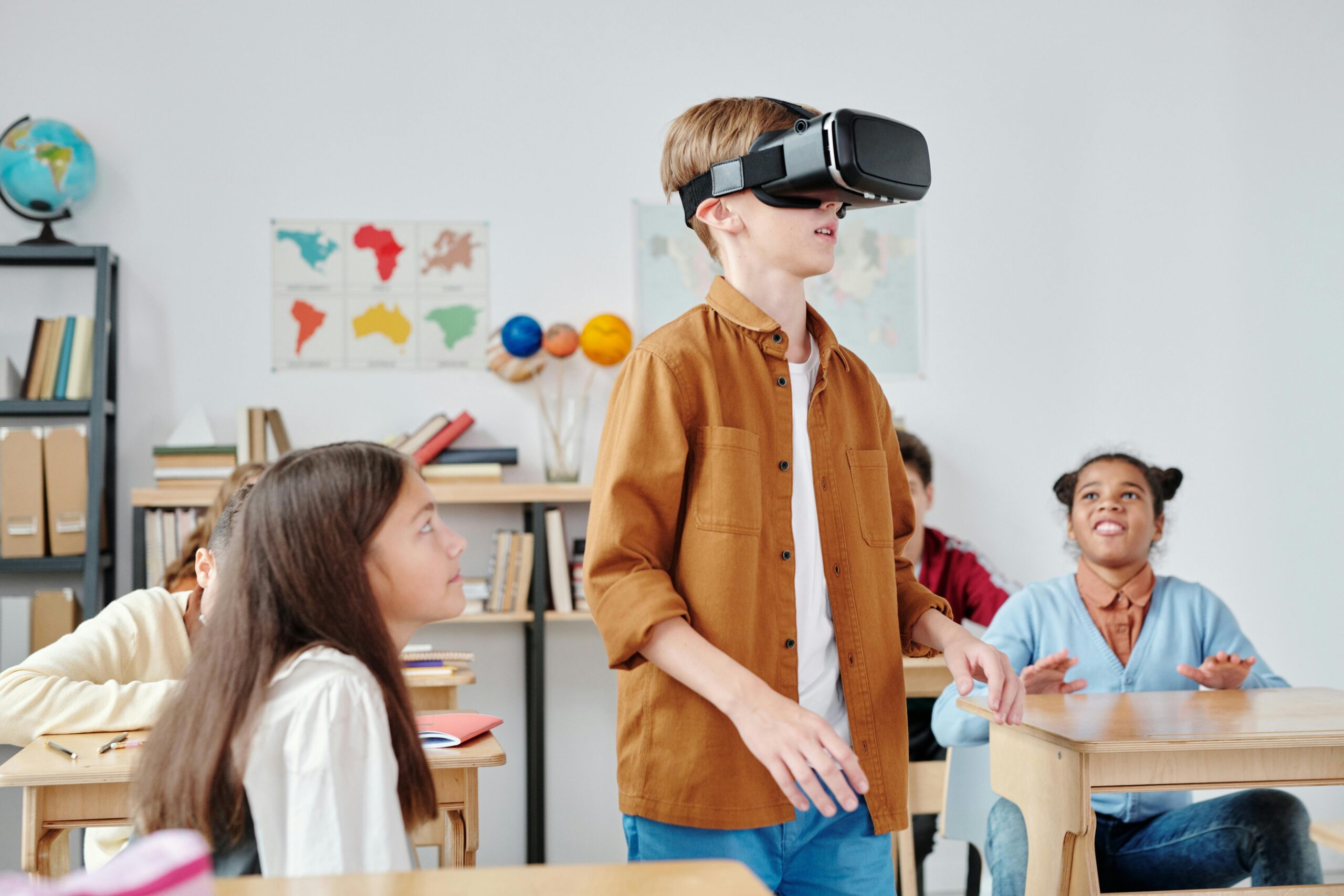
Imagine a history class where students don’t just memorize dates from a dusty textbook. Instead, they strap on a headset and teleport 4,500 years into the past. The humidity of the bronze age hits them; the noise of a bustling marketplace fills their ears, and they physically look down into the depths of the Great Bath of Mohenjo-daro.
This isn’t science fiction—it is the current reality of Virtual Reality (VR) in education.
As we move through 2025, the integration of immersive technology in classrooms has shifted from a novelty to a necessity. Among the most compelling applications is the virtual reconstruction of the Indus Valley Civilization (IVC). This article explores how VR is revolutionizing history education, taking students off the page and into the streets of Harappa and Mohenjo-daro.
The Shift: From Textbooks to Teleportation
The global VR in the education market is experiencing explosive growth, projected to reach over $22 billion by the end of 2025, growing at a CAGR of roughly 38% over the last year.
Why the surge? Educators are realizing that the “chalk and talk” method struggles to compete with the digital native’s attention span. History, often criticized by students as “boring” or “abstract,” is the perfect candidate for VR disruption.
Key EdTech Trends (2024–2025)
- Experiential Learning: Schools are prioritizing “learning by doing” over rote memorization.
- AI-Driven Environments: New VR modules use AI to adapt the historical simulation based on student questions.
- Accessibility: The cost of headsets (like the Meta Quest 3 or mobile-based VR solutions) has stabilized, making adoption feasible for more districts.
Walking the Streets of Mohenjo-daro: A VR Case Study
The Indus Valley Civilization is notoriously difficult to teach. Unlike Egypt with its standing Pyramids, the IVC is largely defined by low-walled ruins and complex urban planning that requires imagination to reconstruct. VR bridges this gap.
Here is what a modern Indus Valley VR module looks like for a student today:
1. The Urban Planning Immersion
Upon entering the simulation, students aren’t just looking at a map; they are standing at the intersection of a grid-planned street. They can see the sophisticated drainage systems functioning in real-time, watching how ancient engineers managed water flow—a concept that falls flat in text but is fascinating in 3D.
2. The Great Bath Experience
In a standard lesson, the Great Bath is just a photo. In VR, students can:
- Walk the perimeter of the bath.
- Inspect the bitumen lining (used for waterproofing).
- Interact with virtual avatars performing ritual baths, providing context to the architecture.
3. Artifact Interaction
One of the most powerful features of VR is haptic interactivity. Students can “pick up” fragile artifacts like the Dancing Girl statue, the Priest-King, or the famous Pashupati Seal. They can rotate these objects, viewing 360-degree angles that even museum visitors are rarely permitted to see.
Expert Insight: “VR transforms the Indus Valley from a ‘lost’ civilization into a ‘living’ one. When a student stands inside a granary and sees how grain was stored for thousands of people, the concept of a centralized economy becomes instantly understandable.” — Dr. Sarah Jenkins, Historical EdTech Researcher
The Data: Why VR History Lessons Work
The efficacy of VR isn’t just anecdotal; the data from 2024–2025 supports it.
| Metric | Traditional Classroom | VR-Enhanced Classroom | Impact |
| Knowledge Retention | 20–30% after 2 weeks | 75–90% after 2 weeks | Immersion anchors memory. |
| Student Engagement | Low to Moderate | Very High | Active participation drives focus. |
| Test Scores | Average | 15–20% Increase | Visual learners thrive. |
| Empathy/Connection | Low | High | “Presence” creates emotional bonds. |
The “Awe” Factor
Recent studies indicate that the sensation of “awe”—created by seeing the scale of the Citadel or the uniformity of Harappan bricks—primes the brain for learning. Students aren’t just consuming information; they are experiencing an event.
Overcoming Challenges in the VR Classroom
While the benefits are clear, the road to full adoption has speed bumps.
- Cost vs. Scale: While Google Cardboard is cheap, high-fidelity headsets are an investment. Schools are increasingly adopting “VR Labs” where classes rotate through, rather than 1:1 headset ratios.
- Teacher Training: The technology is only as good as the instructor. Professional development is crucial to ensure teachers know how to guide a VR tour rather than just letting students play.
- Motion Sickness: A small percentage of students experience cyber-sickness. Modern high-refresh-rate headsets (90Hz+) have significantly reduced this issue in 2024 and 2025 models.
The Future: AI and the Metaverse
Looking ahead to late 2025 and 2026, the next phase is AI-integrated NPCs (Non-Player Characters).
Imagine walking up to a merchant in a virtual Lothal dockyard and asking, “What are you trading today?” The AI character could respond, referencing real trade data about carnelian beads and cotton sent to Mesopotamia. This creates a dynamic, personalized history tutor inside the simulation.
Conclusion
The Indus Valley Civilization was a society ahead of its time, boasting engineering feats that rival modern capabilities. It is only fitting that we use the most advanced technology of our time—Virtual Reality—to study them.
By bringing the dust of Harappa to life, we aren’t just teaching history; we are inspiring the next generation of archaeologists, engineers, and historians. The classroom walls are coming down, and the past is finally open for business.
Actionable Takeaways for Educators
- Start Small: You don’t need 30 Oculus headsets. Start with mobile-based VR tours using smartphones and cardboard viewers.
- Use Free Resources: Utilize platforms like Google Arts & Culture and the British Museum’s WebVR experiences which often require no installation.
- Blend the Curriculum: Don’t replace the textbook—enhance it. Use VR as the “hook” at the start of the unit or the “review” at the end.
- Focus on Inquiry: Give students a mission inside the VR world (e.g., “Find three examples of water management”), rather than just a passive tour.
Frequently Asked Questions (FAQ)
1. Is VR safe for younger students (primary school)?
Yes, manufacturers generally recommend VR for ages 13+, but shorter, supervised sessions (5–10 minutes) are widely used in upper elementary grades (ages 10-12) with parental consent. Tablet-based AR (Augmented Reality) is a great alternative for younger kids.
2. Do I need expensive gaming computers to run these history simulations?
Not anymore. Most modern educational VR content runs on “standalone” headsets (like the Meta Quest) or even mobile devices, removing the need for expensive PC rigs.
3. specifically what Indus Valley sites can be visited in VR?
The most common sites available in educational software are Mohenjo-daro (specifically the Citadel and Great Bath) and Harappa. Some advanced modules also include the dockyards of Lothal.
4. Does VR actually improve grades in history class?
Yes. 2024 studies suggest that “gamified” learning and immersive environments improve retention rates by up to 75%, which directly correlates to higher test scores and better conceptual understanding.
5. Where can I find these VR apps?
Look for apps like Google Expeditions (now Arts & Culture), Unimersiv, and educational content on the Meta Quest Store. Many museums also host WebVR tours directly on their websites.