The school field trip occupies a specific place in educational memory — the excitement of going somewhere real, the informality compared to the classroom, the way the physical context of a museum, a historical site, or a natural environment changes how you process information. The research on embodied learning — the superior retention and comprehension that comes from experiencing something in physical context rather than reading about it — supports the intuition that field trips are educationally valuable, not just enjoyable.
Virtual field trips have been positioned as both a supplement and a substitute for physical ones, and the honest assessment of where they add value and where they don’t requires distinguishing between these use cases rather than treating them as equivalent. As a supplement — providing access to environments that are physically inaccessible (the deep ocean, the surface of Mars, the interior of a human cell), historically distant (ancient Rome, a World War II battlefield), or financially inaccessible for schools with limited budgets — virtual field trips have genuine and significant educational value. As a substitute for a real museum or a real natural environment, they’re more limited.
What Virtual Field Trips Actually Offer
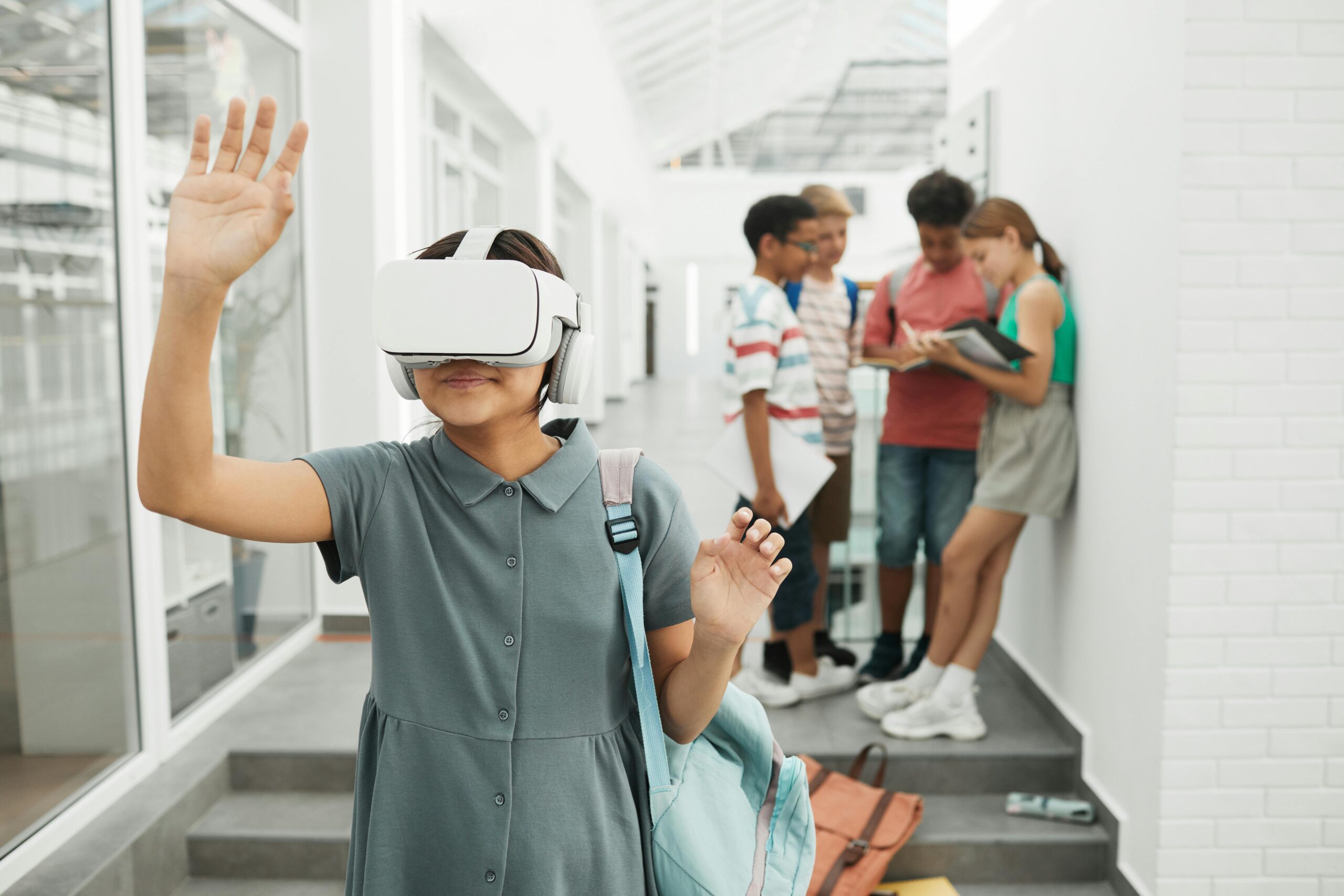
The technology range is considerable. At the low end, a curated set of 360-degree photographs with structured learning activities delivered on a standard screen offers more contextual depth than a textbook without the immersive quality of VR. At the high end, Google Expeditions and similar platforms deliver genuinely immersive VR experiences in which students can explore environments with spatial awareness and interactive elements that flat-screen viewing can’t produce. The hardware requirement for the VR end — headsets, sufficient classroom devices — is still a barrier for many schools, and the evidence that VR immersion produces significantly better learning outcomes than high-quality interactive 360-degree video (which requires no special hardware) is more limited than VR proponents suggest.
The educational advantage that virtual field trips reliably deliver is access. A state school in an inland area can virtually visit the Great Barrier Reef; a school with limited transport budget can visit the British Museum’s complete collection; a class studying ancient civilisations can walk through a reconstructed Pompeii in a way that no physical visit currently permits. The democratisation of experiential access is a genuine and significant educational benefit that doesn’t require the virtual experience to be equivalent to the physical one to be valuable.
Best Practice for Implementation
The research on effective virtual field trip implementation shares consistent findings: preparation and follow-up matter as much as the experience itself. Virtual visits used without structured pre-learning (establishing the context and purpose), active engagement during (guided observation tasks, structured questions), and follow-up consolidation (reflection, application, discussion) produce weaker learning outcomes than those embedded in a coherent learning sequence. The virtual field trip as an isolated event — “let’s watch this video” without context — is no more educationally effective than any other unsupported media consumption. As a component of a well-designed learning sequence, it is considerably more valuable.