The cost of living crisis has done something psychologically interesting: it has forced a renegotiation of the relationship between spending and wellbeing that many people had been postponing. When circumstances make the question “what do I actually need to be happy?” urgent and practical rather than philosophical, the answers that emerge are often surprising. Many things people assumed were non-negotiable turn out to be removable without loss. And some things removed are not missed — they are discovered, in their absence, to have been primarily signalling rather than enjoyment.
Frugal optimism is not austerity. Austerity is the grim acceptance of less, the joyless reduction of expenditure as a response to constraint. Frugal optimism is something more specific and more interesting: the active, chosen discovery that a well-considered simpler life contains significant pleasures that a more expensive but less thoughtful life obscures. It is an attitude, not a budget category.
The Consumption-Happiness Research
The research on consumption and happiness has been converging on a clear finding for several decades: above a threshold of comfort — sufficient food, housing, healthcare, and social participation — additional consumption produces diminishing returns in wellbeing, and in many cases negative returns (through the stress of maintenance, the opportunity cost of time spent earning money to fund it, and the psychological adaptation that quickly normalises new possessions and generates new desires). The specific purchases with the best wellbeing return are consistently: experiences over objects, social experiences over solitary ones, and the elimination of irritants over the addition of pleasures. Fixing the thing that makes your morning commute unpleasant returns more wellbeing per pound than buying something new and desirable.
What Frugal Optimism Looks Like in Practice
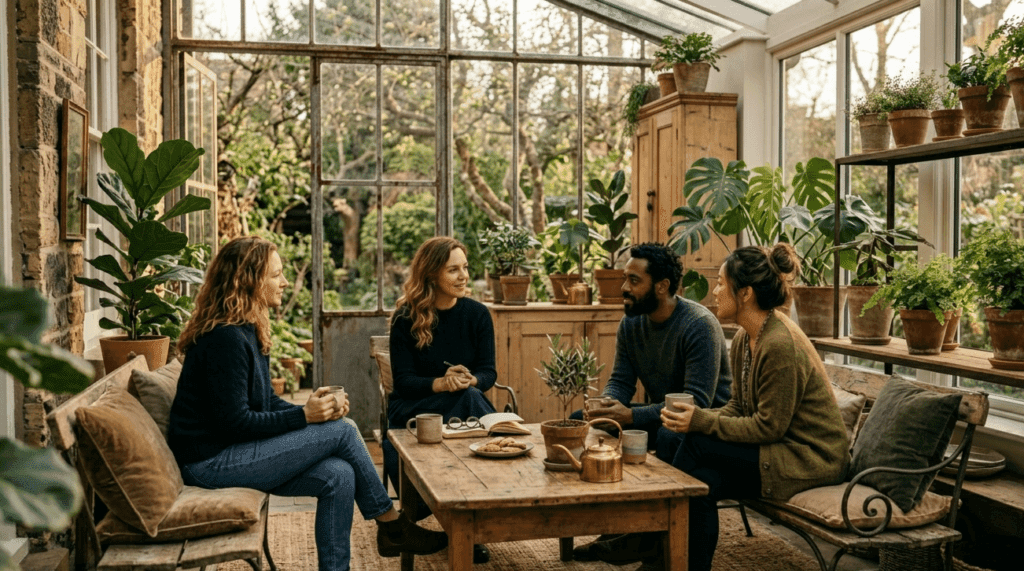
The frugal optimist’s version of a good weekend costs very little and is genuinely enjoyable: cooking something ambitious from scratch with whatever is in the kitchen, walking somewhere unfamiliar, having a long conversation with someone interesting over a cheap bottle of wine, reading a book borrowed from a library. These activities share a characteristic: they require attention and presence rather than money, and they generate the kind of engaged, absorbed experience that psychological research identifies as the most reliably positive — what Csikszentmihalyi calls “flow.” The expensive alternatives are not intrinsically less enjoyable. But they’re not reliably more enjoyable either, and they come with the hidden costs of earning the money to fund them and the comparative dissatisfaction of measuring your consumption against others in a culture of visible spending. Frugal optimism is partly about what you spend and mostly about what you pay attention to. Attention, directed carefully, is free and inexhaustible.
One thought on “Frugal Luxury: How to Live Well Without Spending More”
Comments are closed.