⚕️ Medical note: Fasting protocols are not suitable for everyone. Consult your doctor before starting, especially if you have a medical condition, take medication, or are pregnant.
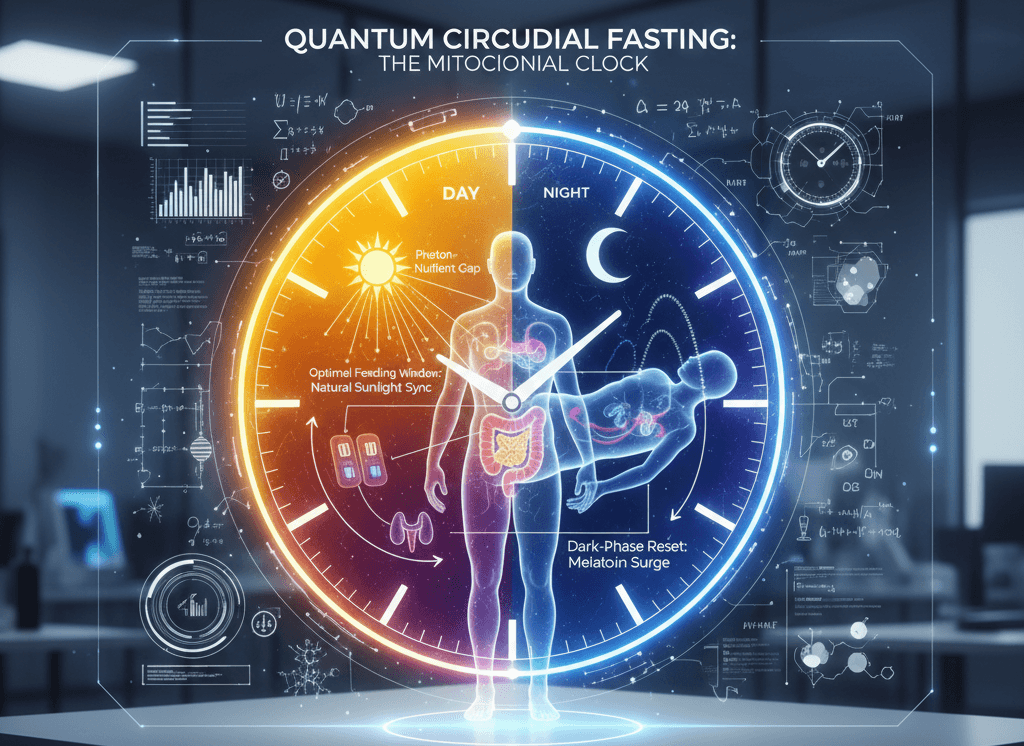
The wellness industry has a gift for taking legitimate science and packaging it in language so hyperbolic that the underlying research becomes almost unrecognisable. “Quantum circadian fasting” is a phrase that does exactly that — strip away the jargon and what you have is time-restricted eating (TRE), a dietary approach with a genuinely interesting body of scientific evidence behind it. The “quantum” adds nothing. The circadian part, however, is where it gets genuinely interesting.
Time-restricted eating means confining your eating to a specific window each day — typically eight to ten hours — and fasting for the remainder. What distinguishes it from older forms of intermittent fasting is the increasing recognition that when you eat may be as important as what you eat, because our metabolic processes are deeply tied to our circadian biology.
The Circadian Connection
Every organ in your body has what researchers call a “peripheral clock” — a molecular timer that coordinates cellular function across a roughly 24-hour cycle. Your liver, gut, pancreas, and fat tissue all behave differently depending on the time of day. Insulin sensitivity, for instance, is significantly higher in the morning than in the evening. A 2019 study published in Cell Metabolism found that eating the same number of calories earlier in the day produced markedly better metabolic outcomes than eating them later — lower blood glucose, lower insulin, reduced blood pressure — in overweight men with prediabetes.
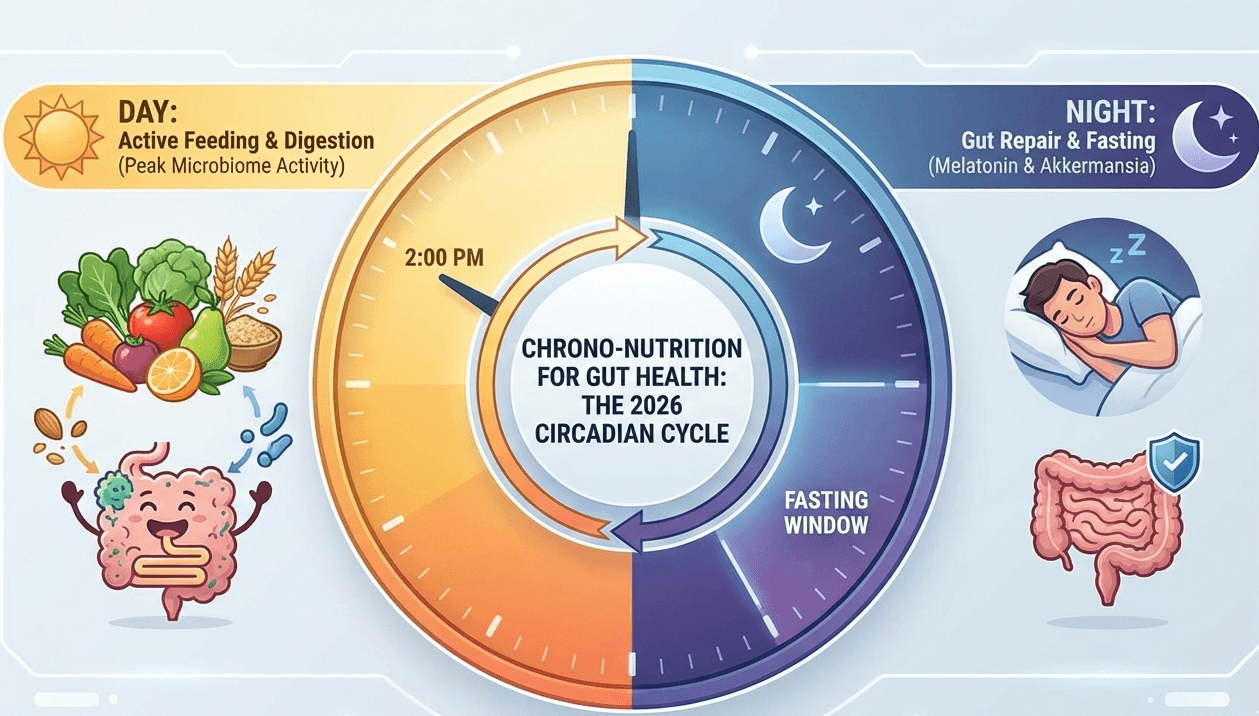
The gut microbiome has its own circadian rhythm. Research from the Salk Institute has shown that the populations of gut bacteria shift across the day in ways that appear to be entrained by feeding patterns. When eating patterns are misaligned with the light-dark cycle — as in shift workers or people who eat late at night regularly — the microbiome becomes desynchronised. This disruption correlates with worse metabolic health markers. Time-restricted eating, particularly when the eating window is front-loaded toward earlier in the day, appears to help resynchronise these patterns.
What the Clinical Trials Show
The clinical evidence for TRE in humans has expanded substantially in the last five years. A randomised controlled trial published in the New England Journal of Medicine in 2022 compared TRE (eight-hour window) with standard caloric restriction in people with obesity and found comparable weight loss between the two approaches over 12 months. The TRE group achieved similar outcomes without the need to actively count calories.
For cardiometabolic health specifically, the picture is encouraging but nuanced. Multiple trials have shown reductions in blood pressure, fasting glucose, and inflammatory markers. A 2023 meta-analysis in Obesity Reviews found consistent improvements in waist circumference and fasting insulin across TRE trials, though the magnitude of effects varied considerably with the timing and duration of the window.
It’s worth noting that much of the most dramatic TRE research was done in animal models, and the results in humans, while positive, are more modest. The biology is real; the marketing overreach around “metabolic resets” and “mitochondrial optimisation” is not supported by anything like the evidence implied.
How to Actually Do It Sensibly
The most evidence-supported TRE protocol for general health is a ten-hour eating window, aligned with daylight hours. That means something like 8am to 6pm, or 9am to 7pm. You eat normally within that window — no caloric restriction required — and fast for the remaining 14 hours, most of which you’re asleep for.
Early TRE, where the window skews toward the first half of the day, appears to offer greater metabolic benefit than late TRE. Practically, for most people with ordinary working and social lives, a strict early window is difficult to sustain. A middle compromise — avoiding eating in the two hours before sleep and not eating until a reasonable morning time — captures some benefit without requiring you to have finished eating by 5pm.
Black coffee, plain tea, and water don’t break the fast in any metabolically meaningful sense. Milk in coffee does, if it’s a significant amount. Artificial sweeteners are more contested — the evidence suggests they may provoke an insulin response in some people, so treating them as equivalent to sugar during the fast is the conservative approach.
Who Shouldn’t Do This
People with a history of disordered eating should approach any form of restrictive eating pattern with significant caution and ideally with clinical support. TRE, however gently framed, involves deliberate restriction of eating times, and that structure can be triggering for people with a complex relationship with food. Type 1 diabetics and people on certain medications that require food timing should not modify their eating patterns without medical guidance. Pregnant and breastfeeding women need adequate caloric intake at regular intervals and are not appropriate candidates for fasting protocols.
For generally healthy adults who are interested in metabolic health, TRE is one of the better-evidenced dietary strategies currently available — evidence-based, practically achievable, and free of the financial cost that attaches to most wellness trends. Ignore the quantum prefix. The circadian biology underneath it is the real story.

One thought on “Quantum Circadian Fasting: A Protocol for Mitochondrial Peak”