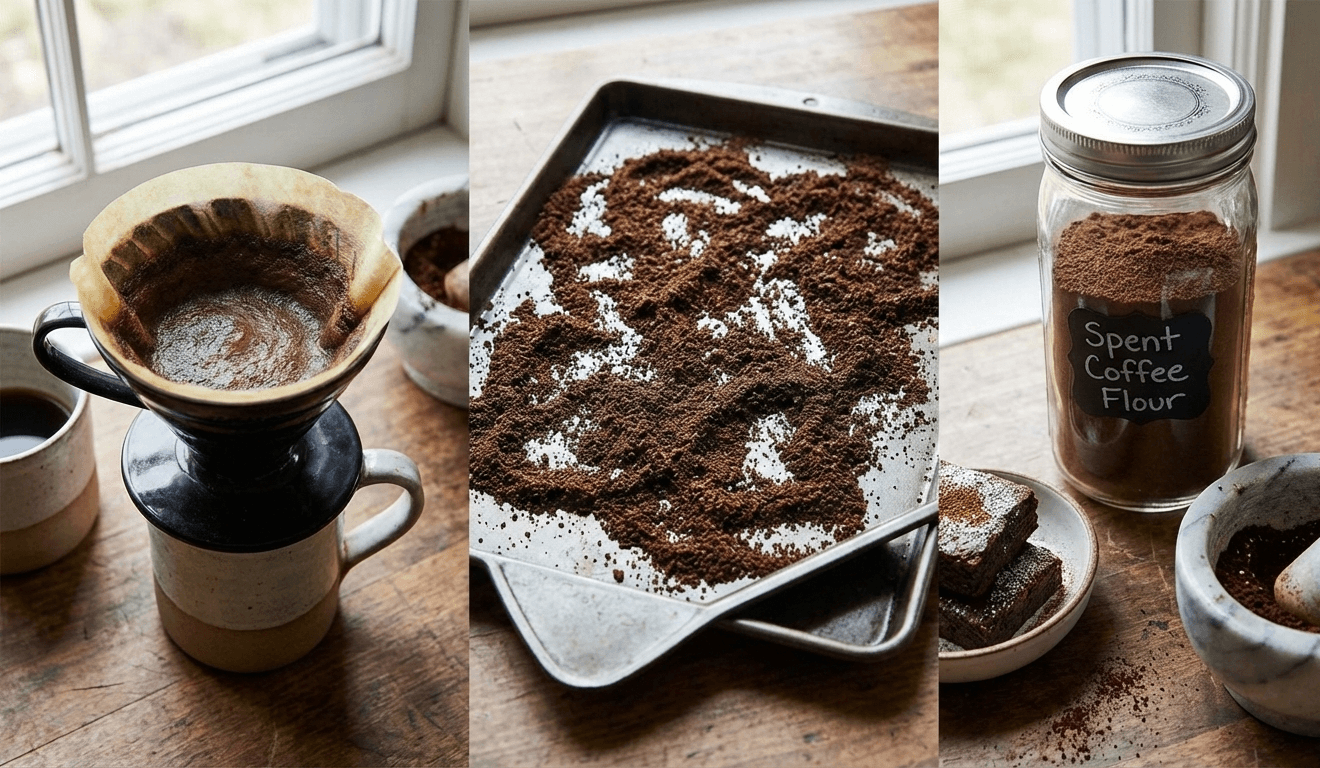
Every morning, the world produces a staggering quantity of spent coffee grounds — the wet, dark material left after brewing — and most of it goes into the bin. This strikes me as a practical waste rather than a sustainability abstraction: spent coffee grounds have culinary applications that are genuinely interesting, a nutritional profile that isn’t negligible, and a depth of flavour that works in ways most cooks haven’t explored.
The spent grounds from a morning espresso or pour-over have already had their most soluble compounds extracted, which is the point — the bitterness that makes straight ground coffee overwhelming in cooking has been substantially reduced by brewing, leaving behind a dark, earthy material with residual coffee flavour, significant fibre, and a fine-grained texture that works interestingly in baked goods and as a dry rub base.
What’s Actually Left After Brewing
Spent grounds retain about 10 to 15 percent of the caffeine of fresh grounds — relevant if you’re adding them to afternoon baking or if you’re caffeine-sensitive. They retain significant dietary fibre, antioxidants including chlorogenic acids, and the complex organic compounds that give coffee its characteristic flavour. What they’ve lost is most of the water-soluble bitter compounds and the majority of aromatic volatiles — which, paradoxically, makes them more versatile in cooking than fresh grounds.
The practical issue with using spent grounds directly from the morning’s brew is moisture content. Drying them first — spread thin on a baking sheet at 100°C for 20 to 30 minutes — gives you a product closer to coffee flour in behaviour, with better storage properties and more predictable results in baking.
Where They Work Best
In baked goods, dried spent grounds work well in chocolate cakes, brownies, and anything where you want to intensify chocolate flavour without adding more chocolate. Coffee amplifies cocoa’s depth without making the result taste like coffee. Use one to two tablespoons per standard brownie recipe, incorporated with the dry ingredients.
As a dry rub for meat, spent grounds are excellent. A mixture of dried grounds, smoked paprika, brown sugar, salt, and black pepper on beef short ribs or brisket produces a dark, complex bark during long, slow cooking. The coffee contributes tannins that help tenderise the surface proteins and a bitterness that balances fat. In savoury sauces, a tablespoon of dried spent grounds added to a red wine reduction adds depth and a slight bitterness that works well against rich, fatty meats — a background note that makes you wonder why the sauce tastes more interesting than expected. Cooking with your spent grounds is free, immediately available, and better than you’d expect once you know how to use them.


2 thoughts on “Spent Coffee Flour Benefits: How to Upcycle Your Coffee Grounds”