The bag you carry every day is a stress test. Straps flex under load. Corners scrape curbs. Rain soaks through markets and commutes. What survives that test — and what doesn’t — is the real story behind the vegan leather bag vs real leather durability comparison that most buyers never see before they swipe their card.
The stakes are higher than aesthetics. They’re economic, environmental, and deeply practical.
What Exactly Is Vegan Leather Made From?
Vegan leather is an umbrella term covering at least four structurally distinct material categories, each with different durability profiles. Standard PU (polyurethane) and PVC (polyvinyl chloride) dominate the market. Newer entrants include plant-based alternatives such as Piñatex (pineapple leaf fiber), cactus-derived Desserto, and mycelium leather. Each behaves differently under mechanical stress, UV exposure, and moisture.
Most bags labelled “vegan leather” in mainstream retail are PU or PVC constructions. Both are layered synthetics: a fabric or foam base coat bonded to a surface polymer. That layered construction is structurally significant. It’s where durability begins — and often where it ends.
Plant-based alternatives like Piñatex blend pineapple leaf fibers with a corn-based PLA and a water-based polyurethane resin coating, per Ananas Anam’s published specifications. That PU coating, however, introduces the same delamination risk as standard synthetics.
How Long Does a Real Leather Bag Actually Last?
Full-grain real leather, when properly maintained, demonstrates exceptional structural longevity. According to a 2024 Textile Institute study, leather backpacks showed minimal damage after five years of daily use. The Leather Working Group (LWG) reports that full-grain leather retains 85% of its tensile strength after a decade of regular use. Heritage pieces documented at over 30 years of use remain structurally intact.
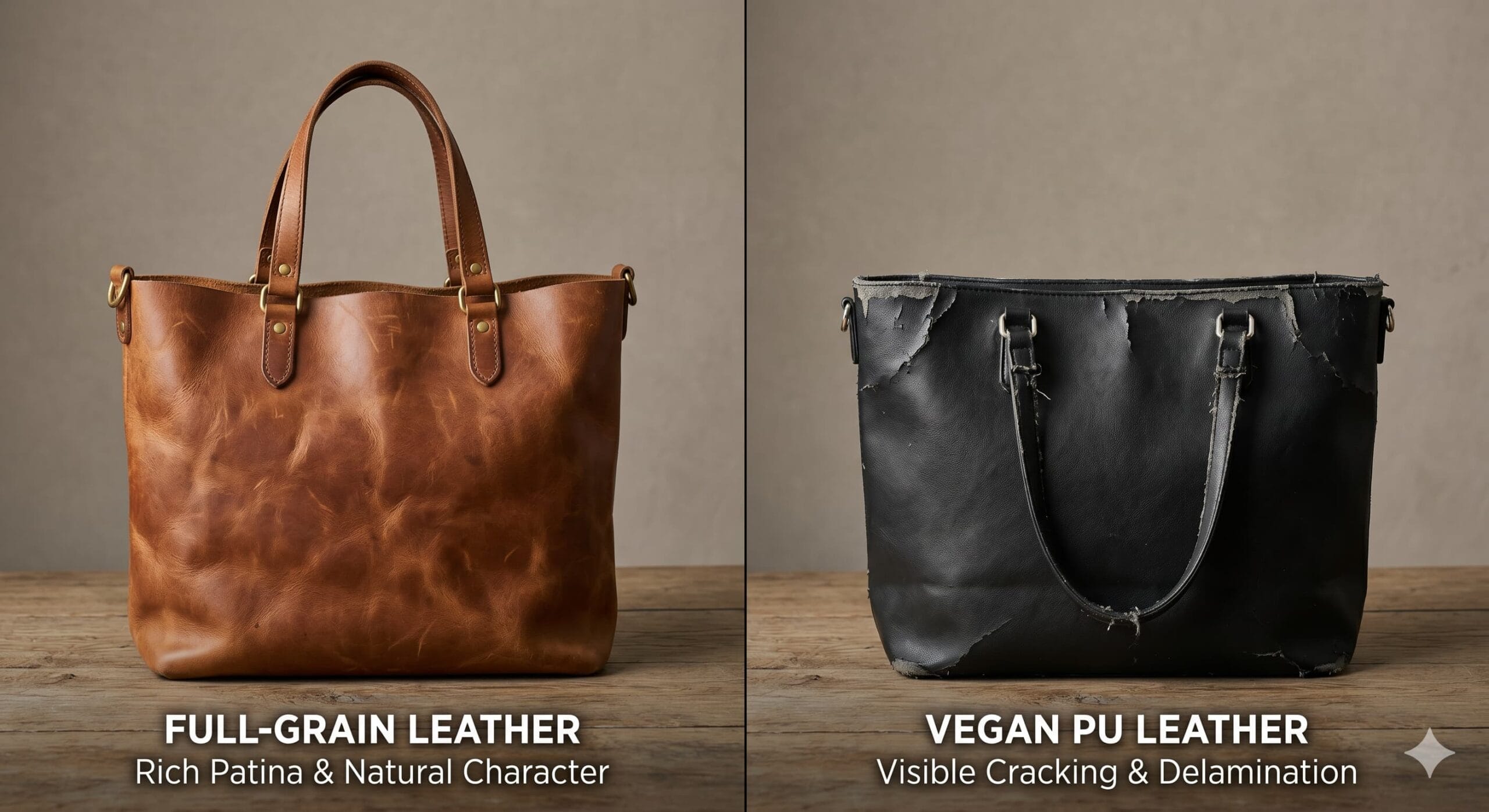
The key variable is grade. Full-grain leather — the outermost, unprocessed layer of a hide — is categorically different from top-grain or bonded leather. It breathes, flexes, and develops a protective patina as surface oils redistribute under friction.
That patina is not cosmetic. It’s a functional adaptation. Surface scratches absorb into the grain rather than rupturing a coating layer. The material self-corrects at the microscopic level in ways no synthetic material currently replicates.
Dooney & Bourke customers have publicly documented bags from the early 1990s still in active use — over three decades of performance from a single purchase. That data point is not marketing. It’s structural evidence.
How Long Does a Vegan Leather Bag Last Before It Fails?
Standard PU vegan leather bags typically show surface cracking, fading, and delamination within one to three years of daily use, particularly at high-stress points including handle junctions, flap folds, and base corners. PVC constructions resist moisture initially but stiffen and crack with prolonged UV exposure. Real-world testing tracked over 12 months confirms delamination risk increases significantly with damp storage conditions.
A one-year comparative study tracking daily-use bags across identical conditions — weekly rain, laptop loads, office storage — found PU bags showing light cracking at stress points by month 12. One exhibited full base delamination after extended damp exposure. The PVC bag remained structurally intact but stiff throughout.
The critical failure mode for PU leather is not surface wear. It’s the bond between the polymer surface and its substrate. Once that bond breaks, peeling is irreversible. There is no conditioning treatment, no repair protocol, and no industry-standard fix for delaminated synthetic leather.
Does Vegan Leather or Real Leather Win on Cost Over Time?
Real leather carries a higher upfront cost but delivers superior cost-per-year economics over a decade of use. A full-grain leather bag priced at $150–$200 used for 15 years costs approximately $10–$13 per year. A comparable PU vegan bag at $40–$60 replaced every two years costs $20–$30 annually. A 2026 lifecycle analysis cited by No More Nobody found that replacing a PU bag 12 times over 25 years generates 12 times the manufacturing energy of one maintained genuine leather bag.
This arithmetic is rarely surfaced at point of sale. Retailers selling vegan leather have little incentive to frame the purchase as a two-year depreciating asset. But the numbers are consistent across independent analyses.
The environmental math compounds the economic argument. Standard PU is a petrochemical product. Its disposal contributes to microplastic pollution. Real leather, when sourced from LWG-certified tanneries — which audit tanneries on environmental processing standards — avoids the most harmful chromium tanning practices and produces a biodegradable end product. See the Leather Working Group’s tannery certification database for verified sourcing criteria.
Are Next-Generation Bio-Based Leathers More Durable?
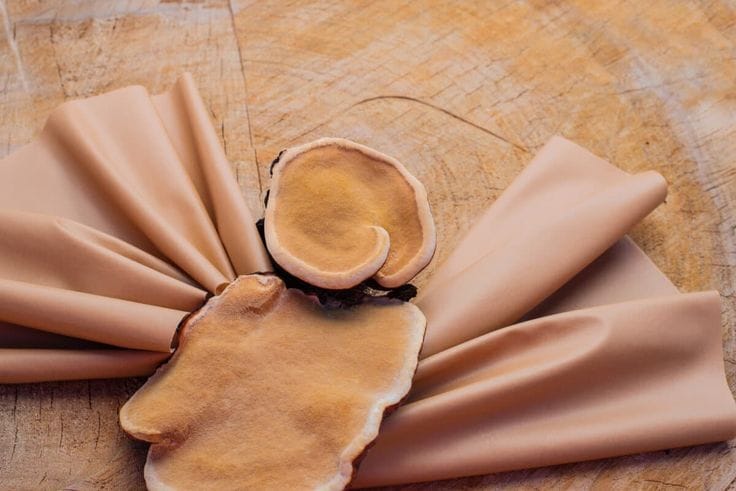
Next-generation bio-based leathers including mycelium (Mylo by Bolt Threads, Reishi by MycoWorks), pineapple fiber (Piñatex by Ananas Anam), and cactus leather (Desserto) represent the most promising structural alternatives to PU. However, commercial durability data remains limited. Mylo production was paused in July 2023 before achieving scale. Piñatex requires a PU resin topcoat for sufficient abrasion resistance. No peer-reviewed multi-year durability study currently exists for any bio-based alternative.
MycoWorks’ Reishi, used in a limited Hermès collaboration, has secured $125 million in Series C investment and claims structural parity with animal leather. Independent long-term wear data has not yet been published.
Piñatex meets international standards for abrasion resistance and seam rupture per Ananas Anam’s testing disclosures. But the required PU coating reintroduces petrochemical dependency and the same delamination vulnerability found in standard synthetics.
This is the frontier that no competitor article has mapped clearly. Bio-based leather is not yet a proven durability solution. It’s a promising R&D trajectory with significant commercialisation gaps.
Which Material Should You Actually Buy?
For buyers prioritising maximum bag lifespan, full-grain real leather from an LWG-certified tannery is the empirically supported choice. For buyers with a strict animal welfare constraint and a two-to-three year replacement tolerance, high-quality PU leather is functional but not permanent. Bio-based alternatives remain aspirational purchases rather than proven daily-use solutions as of 2026.
The vegan leather bag vs real leather durability comparison ultimately resolves around a single, honest question: how long do you need this bag to last?
If the answer is a decade or more, the materials science is clear. Full-grain leather — conditioned every three to six months with a quality leather balm — outlasts the stitching that holds it together. It outlasts trends. In many documented cases, it outlasts the people who first carried it.
If two years is acceptable, PU vegan leather delivers adequate performance at lower upfront cost. Just don’t expect it to age gracefully. It will crack, peel, and shed microplastics on its way out.
The bag you carry is a daily decision. Make it with the actual data, not the packaging copy.