If meditation makes you more anxious, you are not doing it wrong. For a significant portion of people — particularly those carrying unresolved stress or trauma — sitting still and focusing inward is physiologically counterproductive. The nervous system is too activated to benefit from stillness. It needs movement first.
This is not a wellness opinion. It is grounded in neuroscience.
Why Does Meditation Fail for Some People?
Meditation fails for some people because their autonomic nervous system is locked in a sympathetic or dorsal vagal state — fight-or-flight or freeze — making inward attention feel threatening rather than calming. Attempting stillness in this state can intensify distress, not reduce it. Researchers including Dr. David Treleaven, author of Trauma-Sensitive Mindfulness, have documented this phenomenon clinically.
Stephen Porges’ polyvagal theory, introduced in 1994, fundamentally changed how clinicians understand this dynamic. Porges identified a third branch of the autonomic nervous system — the ventral vagal complex (VVC) — responsible for the sense of safety required to rest, connect, and restore. Without access to the VVC, meditation becomes an exercise in tolerating threat, not releasing it.
The fix is not better meditation. The fix is bottom-up regulation — working through the body first, before attempting any mind-centered practice.
What Are Nervous System Regulation Exercises for People Who Can’t Meditate?
Nervous system regulation exercises for people who can’t meditate are body-first, movement-based, or sensory practices that stimulate the vagus nerve and activate the parasympathetic nervous system without requiring stillness, breath-focus, or mental quieting. They work through physiology, not willpower. Science validates each mechanism.
These exercises bypass the cognitive obstacles that make traditional meditation inaccessible. They are the clinical foundation of somatic therapies used by trauma specialists worldwide.
How Does the Vagus Nerve Control Stress and Calm?
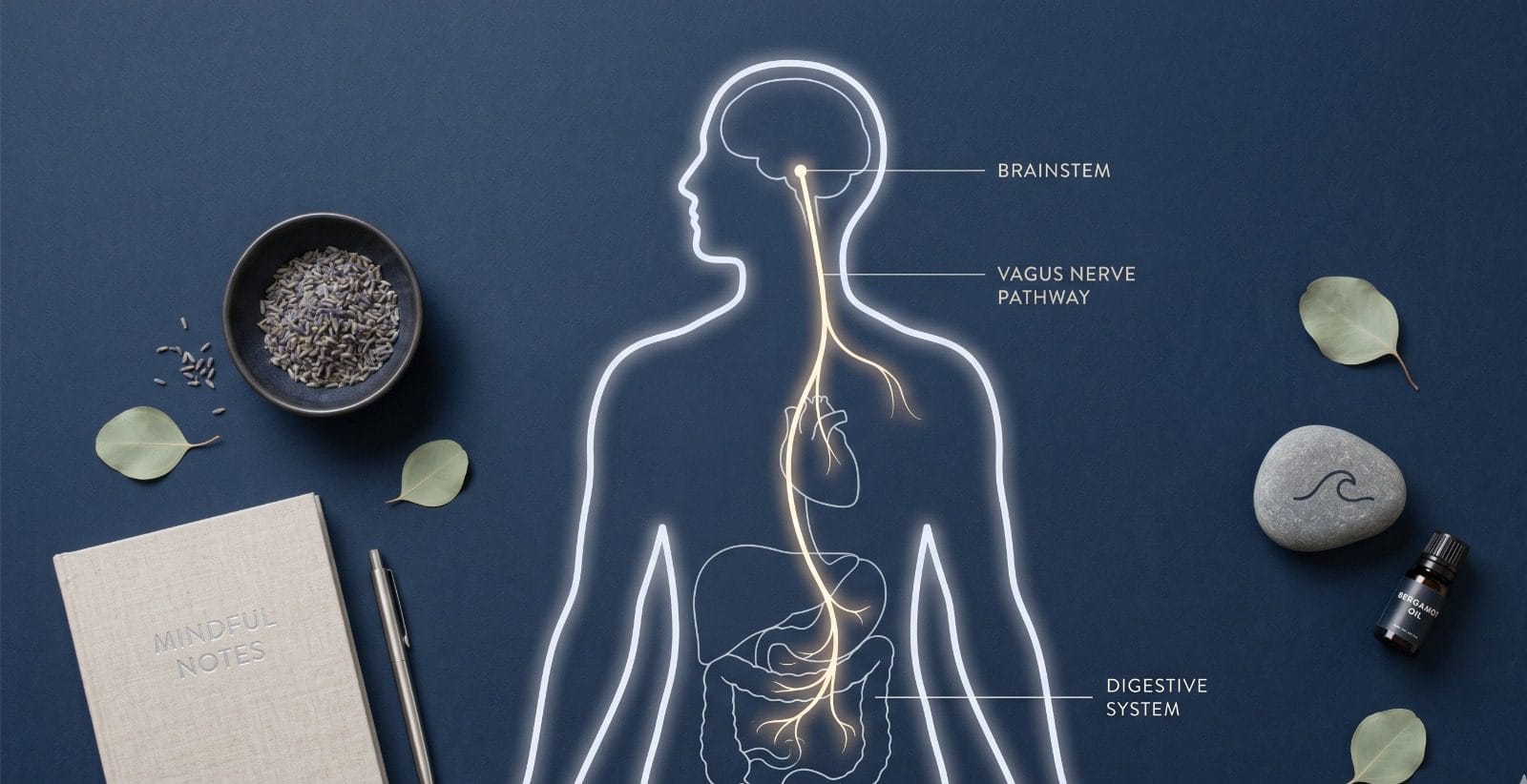
The vagus nerve — the body’s primary parasympathetic highway — runs from the brainstem to major organs including the heart, lungs, and gut. When stimulated, it slows heart rate, lowers cortisol, and signals the brain that the environment is safe. Vagal tone, measurable through heart rate variability (HRV), predicts how quickly someone recovers from stress.
Low vagal tone is associated with anxiety disorders, depression, chronic inflammation, and IBS. The good news: vagal tone is trainable. Every exercise below targets it directly, through afferent (sensory) pathways that the brain cannot override.
Which Breathing Technique Works Fastest Without Meditation?
The physiological sigh — a double inhale through the nose followed by a long exhale through the mouth — is the fastest scientifically validated technique for acute stress reduction without meditation. A 2023 Stanford study published in Cell Reports Medicine (Balban et al.) found it outperformed mindfulness meditation in real-time anxiety reduction across 114 participants.
It works because the extended exhale activates the parasympathetic branch directly. You do not need to clear your mind. You do not need to sustain attention. Two breath cycles can shift your physiological state within 60 seconds.
Practice it at your desk, in your car, before a difficult conversation. The body does not distinguish context.
Can Humming or Sound Regulate the Nervous System?
Yes. Humming, chanting, and producing low vocal tones directly stimulate the vagus nerve through its connections to the larynx and pharynx. This is not metaphor — the vagus nerve innervates the muscles of the throat, making vocalization a legitimate bottom-up regulatory tool. Polyvagal-informed clinicians regularly use the “Voo” sound exercise developed from Peter Levine’s Somatic Experiencing framework.
Try it: take a deep breath and hum a low, extended “voooo” on the exhale. Do this three times. Most people report a warmth in the chest and a subtle slowing of their heartbeat within minutes. It works in traffic. It works in a bathroom stall between meetings. It requires no mental stillness.
Does Cold Water Actually Reset a Dysregulated Nervous System?
Cold water exposure — specifically splashing cold water on the face or immersing wrists in cold water for 30 seconds — activates the dive reflex, a hard-wired physiological response that immediately reduces heart rate via vagal stimulation. Research supports cold water’s direct stimulation of vagal afferents, triggering a measurable parasympathetic response. See: Frontiers in Neuroscience, vagus nerve stimulation reviews.
This is not a biohacking trend. It is basic mammalian neurobiology.
The dive reflex is one of the fastest interventions available for acute sympathetic arousal — panic attacks, rage states, or dissociative episodes. Emergency therapists recommend it as a first-line tool in Dialectical Behavior Therapy (DBT) under the TIPP skill set.
What Role Does Rhythmic Movement Play in Nervous System Regulation?
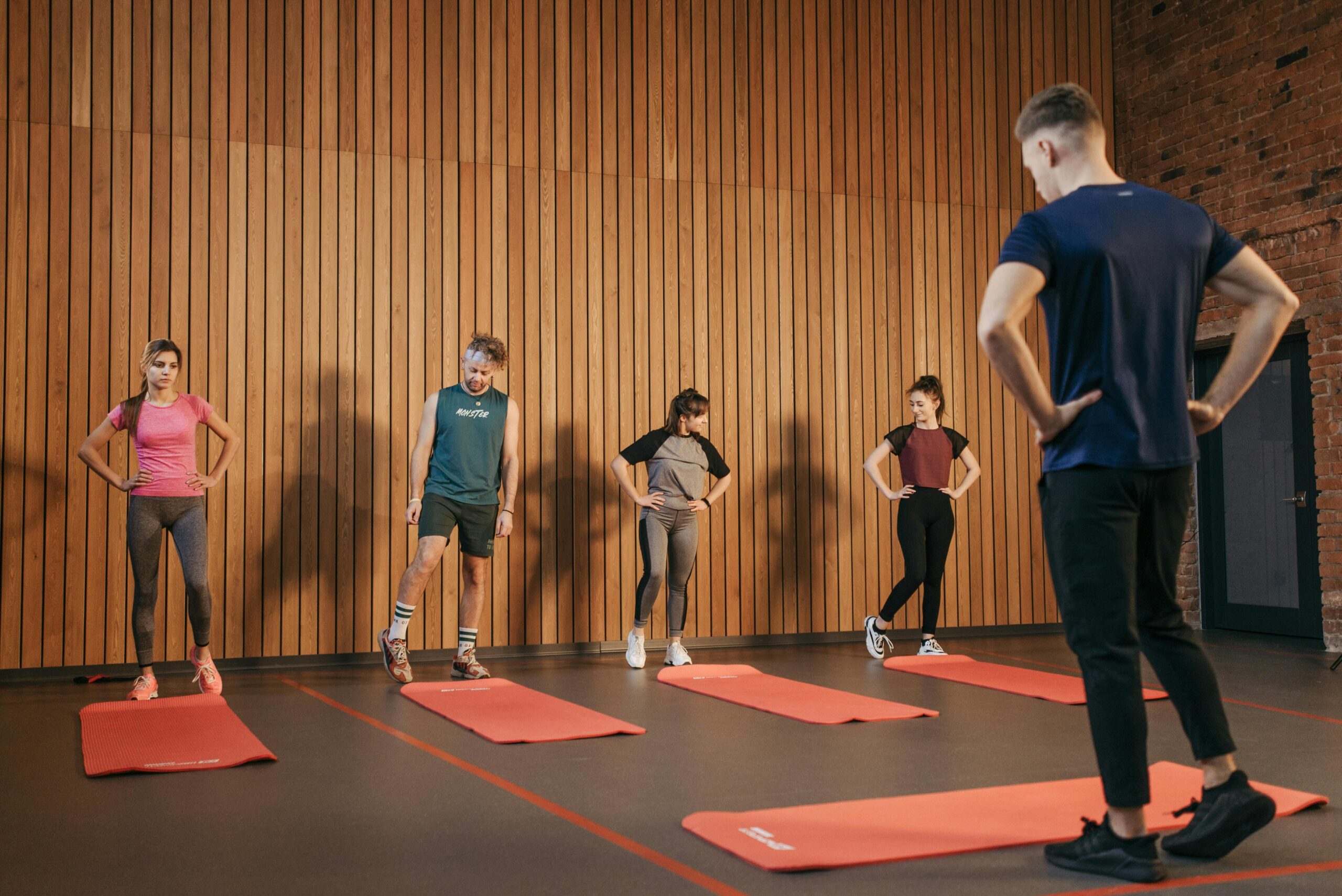
Rhythmic, bilateral movement — walking, rocking, drumming, swaying — regulates the nervous system by creating predictable, repetitive sensory input that the brain interprets as safety. This is why parents instinctively rock distressed infants. The nervous system of any mammal responds to rhythm as a cue that the environment is stable and non-threatening.
EMDR (Eye Movement Desensitization and Reprocessing) harnesses bilateral stimulation therapeutically for trauma. But you do not need a clinical setting. A 20-minute walk — particularly in a natural environment — produces measurable reductions in amygdala activity, according to research from Stanford’s Environmental Neuroscience Lab.
Walking is arguably the most underrated nervous system regulation tool available to anyone, anywhere, at no cost.
How Does Social Co-Regulation Work as a Nervous System Tool?
Co-regulation — the process of one nervous system calming another through proximity, eye contact, or physical touch — is a core mechanism in polyvagal theory. Stephen Porges describes the social engagement system as the body’s first-line regulatory resource. The nervous systems of mammals are wired to co-regulate before they self-regulate.
This means that calling a friend, sitting with a calm person, or even petting an animal is not merely emotional comfort. It is physiological medicine. The vagus nerve reads social cues — tone of voice, facial expression, proximity — and adjusts autonomic state accordingly.
If you cannot meditate, you may simply need a co-regulator before you need a technique.
What Is the Sequence for Using These Exercises Effectively?
Use these exercises in sequence: address acute activation first (physiological sigh, cold water, sound), then introduce rhythmic movement, then layer in social connection. This mirrors the titration approach used in Somatic Experiencing — reducing the charge of the nervous system gradually rather than forcing stillness onto an activated system.
Dr. Peter Levine’s titration framework and Dr. Stephen Porges’ polyvagal ladder both confirm this sequencing. Start at the body. Work toward stillness only once the system has enough safety to tolerate it.
Most people who believe they cannot meditate are simply starting at the wrong point in the sequence.
The nervous system does not respond to discipline. It responds to safety signals — breath, sound, temperature, rhythm, and human connection. Master those signals and stillness, if you ever want it, will eventually find you.