Every year produces a new cohort of ingredients cycling through the wellness food ecosystem with varying degrees of evidence and remarkably consistent marketing enthusiasm. What’s interesting about the current moment is that two of the most discussed — saffron and colostrum — sit at genuinely interesting points on the evidence spectrum. One is an ancient ingredient with real emerging clinical data. The other is a modern repackaging of an ancient food with plausible but overstated claims. The distinction matters for making sensible decisions.
Saffron: The Evidence Is More Solid Than You’d Expect
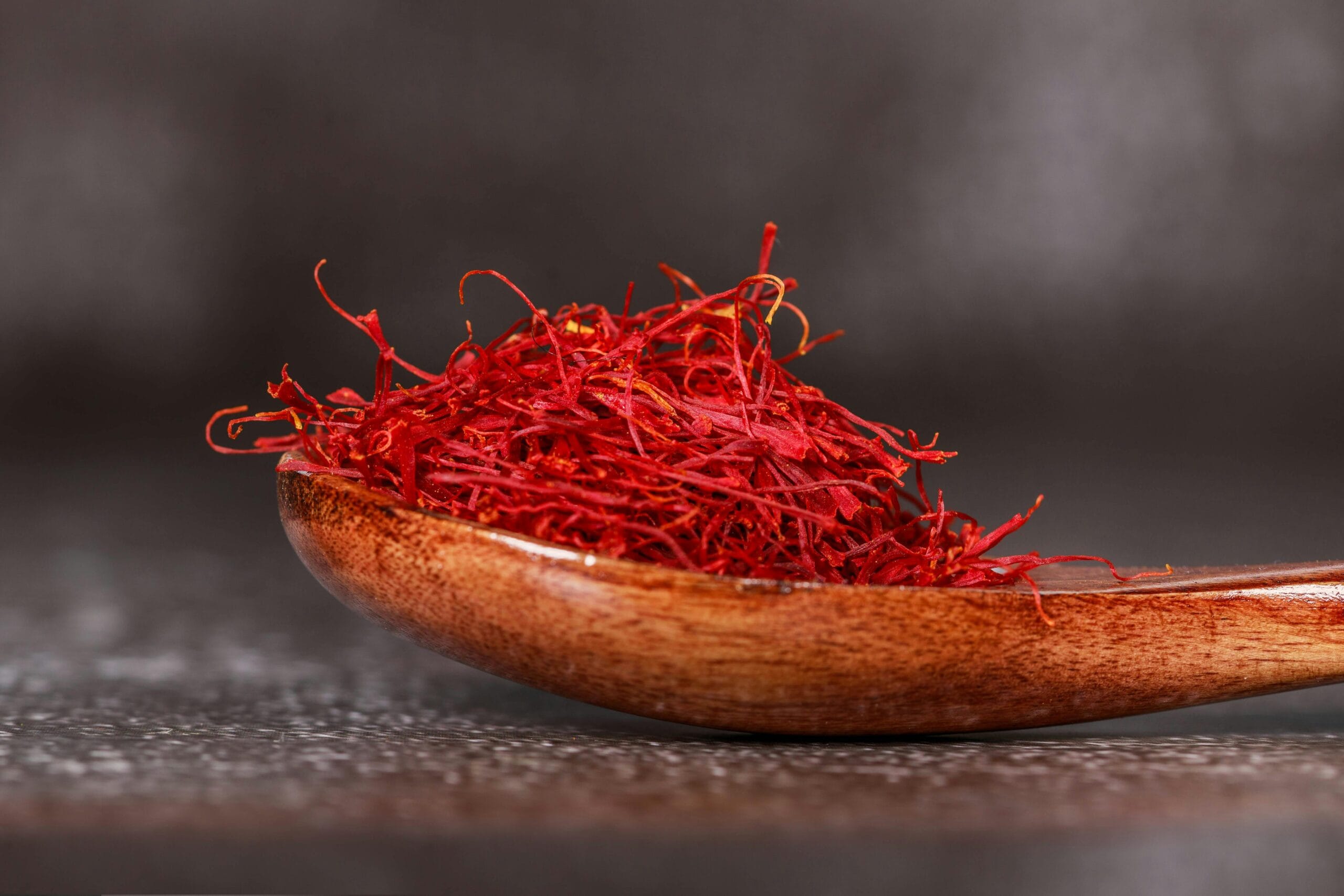
Saffron’s culinary reputation needs no rehabilitation — it’s been among the world’s most prized spices for millennia, and its flavour and colour contribution to paella, risotto Milanese, and Persian rice is irreplaceable. What’s newer is the clinical research on its bioactive compounds — crocin, crocetin, and safranal — in mental health contexts.
A 2020 meta-analysis in the Journal of Integrative Medicine analysed 23 randomised controlled trials on saffron supplementation for depression and anxiety. The findings were striking: standardised saffron extract at 30mg per day performed comparably to antidepressant medication (fluoxetine, imipramine) in mild to moderate depression, with a more favourable side effect profile. The mechanism appears to involve serotonin, dopamine, and NMDA receptor modulation. This doesn’t mean saffron is a treatment for clinical depression — that’s a clinical decision — but it does mean the traditional associations between saffron and mood have a real evidence base. Adding meaningful amounts to cooking delivers the bioactive compounds: the dose in most trials is roughly equivalent to a few pinches of high-quality saffron per day. Make a proper saffron broth. Make a risotto genuinely yellow from saffron. Use real saffron — the genuine article dissolves to a rich golden colour; fraudulent products go red immediately.
Colostrum: Real But Overstated
Bovine colostrum — the first milk produced by cows after calving, harvested within the first 24 to 48 hours — has re-entered the wellness conversation as a gut health, immune support, and athletic recovery product. The marketing claims are more expansive than the evidence supports; the underlying biology is genuinely interesting.
Colostrum is rich in immunoglobulins, growth factors including IGF-1, lactoferrin, and bioactive peptides. The most interesting evidence is on intestinal permeability: several trials have found that bovine colostrum reduces exercise-induced gut permeability in athletes. The immune support evidence is more mixed. The anti-aging and general wellness claims circulating in current marketing are not supported by controlled trials in healthy adults. Colostrum is a legitimate food with real bioactive components. If you’re a serious endurance athlete interested in gut integrity during heavy training, the evidence is worth exploring with a clinician. For general wellness, it remains an expensive supplement with uncertain benefit beyond its amino acid content.

2 thoughts on “Saffron & Colostrum: What Research Actually Says”