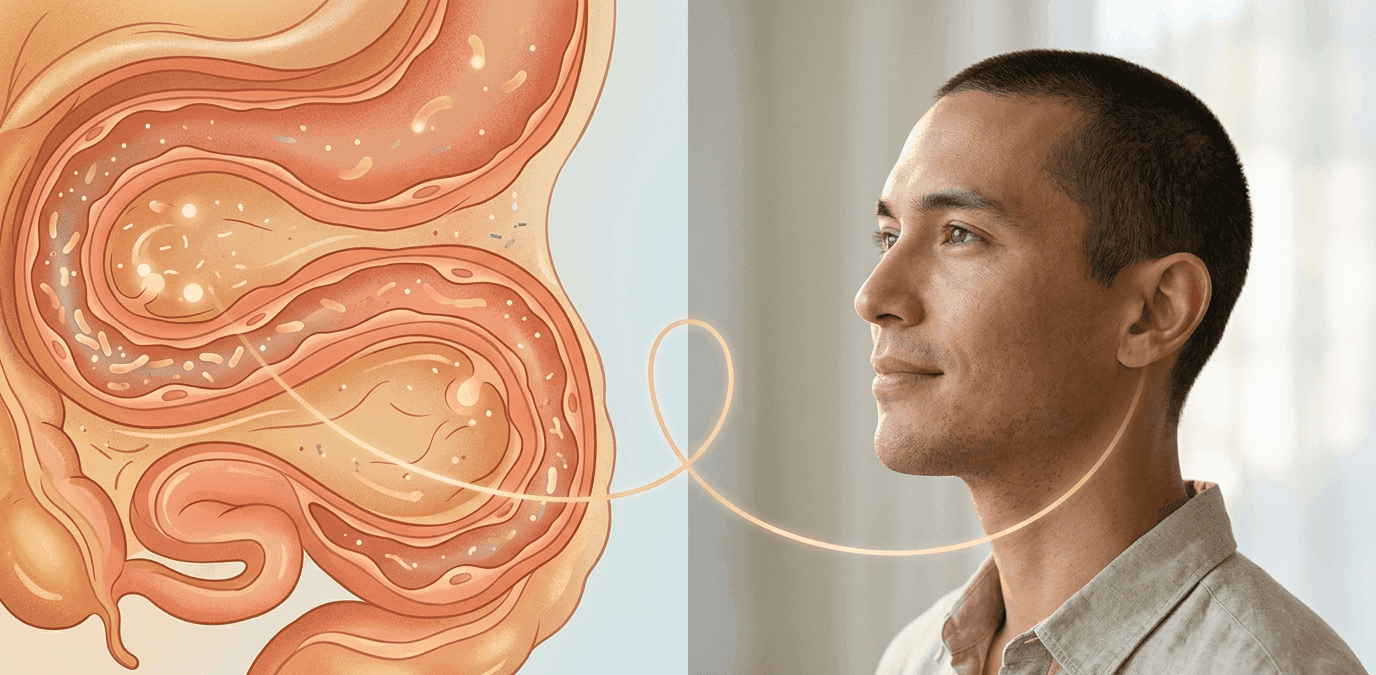
My nutritionist asked me something I wasn’t expecting during a routine consultation two years ago: “What did you eat yesterday?” Not because she suspected a deficiency — but because I’d spent fifteen minutes describing a kind of mental cloudiness I couldn’t shake. Slow thinking. Words that wouldn’t come. A persistent sense of being present but not quite switched on.
She pointed at my gut.
I was skeptical. But the research she walked me through that afternoon changed how I understood my own cognition — and it led me deep into the emerging science of postbiotics, which are now among the most clinically interesting compounds in gut-brain research.
Most articles on this topic either stay vague or push supplements without context. This one gives you the actual mechanism, the honest evidence, and the practical steps — in that order.
What exactly are postbiotics, and how are they different from probiotics?
Postbiotics are the bioactive byproducts that beneficial gut bacteria produce when they ferment dietary fibre. Unlike probiotics — which are live bacteria — postbiotics are non-living compounds: short-chain fatty acids, bacterial cell wall fragments, and peptides that act directly on the body without requiring any live microorganism to survive digestion.
That distinction is more important than it sounds. Probiotic supplements depend on live bacteria surviving manufacturing, shipping, stomach acid, and reaching your colon intact. Postbiotics skip that entire chain. The active compound is already there. For people with compromised gut environments — which includes most people experiencing chronic brain fog — that reliability matters.
The key postbiotic compounds linked to cognitive function are butyrate, acetate, and propionate (the three main short-chain fatty acids), along with urolithins and bacterial peptides like muramyl dipeptide. Of these, butyrate has the strongest research base for brain health.
How does gut dysbiosis actually cause brain fog?
Gut dysbiosis — an imbalance in your gut microbiome, usually caused by poor diet, antibiotics, chronic stress, or illness — triggers brain fog through three connected pathways.
First, it reduces short-chain fatty acid production. Your brain and gut lining both depend on butyrate as a fuel source and an anti-inflammatory signal. When butyrate-producing bacteria are depleted, both systems suffer.
Second, it increases intestinal permeability — what’s commonly called leaky gut. When the gut lining becomes more porous, lipopolysaccharides (LPS) from gram-negative bacteria enter the bloodstream. LPS drives systemic inflammation, and your brain responds by entering a protective, low-output state. The result is the exact cognitive dullness people describe as brain fog.
Third, dysbiosis disrupts the gut-brain axis itself — the bidirectional communication network connecting your enteric nervous system to your central nervous system via the vagus nerve. Research published in Frontiers in Aging Neuroscience (2025) confirmed that microbial imbalances contribute directly to neuroinflammation, mood disturbance, and measurable cognitive deficits.
This isn’t fringe science. It’s peer-reviewed neuroscience with a growing clinical evidence base.
What does butyrate actually do in the brain?
Butyrate is the postbiotic compound most directly linked to clearing brain fog. It crosses the blood-brain barrier — which most gut-produced compounds cannot — and works through several mechanisms simultaneously.
It acts as a histone deacetylase inhibitor, regulating gene expression in ways that reduce neuroinflammation. It strengthens tight junction proteins (ZO-1, Occludin, Claudins) that physically prevent inflammatory molecules from reaching brain tissue. It suppresses microglial activation — the brain’s own inflammatory immune response. And it fuels the colonocytes that maintain the integrity of your gut lining, addressing the root cause of leaky gut rather than just the symptoms.
A 2025 study published in Aging and Disease found that SCFA supplementation in aged subjects reduced hippocampal deterioration and improved performance on cognitive fluency tests. Lower acetate levels, meanwhile, correlate directly with measurable cognitive decline in longitudinal studies.
What does the clinical research actually show — and where are the honest gaps?
Here’s where most articles mislead you: they either overclaim or underclaim. The honest picture is more nuanced.
The mechanistic evidence for postbiotics and brain function is strong. Animal model data is compelling. Human trials on biotic interventions in neurodegenerative conditions — particularly Alzheimer’s — consistently show reductions in neuroinflammatory markers. An umbrella meta-analysis of 13 meta-analyses on biotic supplementation confirmed cognitive benefit from microbiome-targeted interventions in Alzheimer’s models.
But: large-scale, randomised controlled trials specifically targeting brain fog in otherwise healthy adults using isolated postbiotic compounds are still limited as of 2025. The research hasn’t caught up to the mechanism yet.
What this means practically is that the science supports the pathway, not yet a specific supplement protocol. If you’re considering postbiotic supplementation for brain fog, you’re working with strong mechanistic and indirect evidence — not a definitive clinical prescription.
Which foods increase postbiotics naturally?
The most underreported finding in postbiotic research is how effectively diet alone raises postbiotic levels — no supplement required for many people.
Two dietary strategies work in parallel. First, eating fermented foods that deliver postbiotic compounds directly: aged cheese, traditional miso (not the fast-fermented kind), tempeh, and kimchi. The longer the fermentation, the higher the concentration of postbiotic metabolites in the final product.
Second, eating fermentable fibre that feeds butyrate-producing bacteria: oats, garlic, leeks, Jerusalem artichokes, cooked-and-cooled potatoes, and green bananas. These are sometimes called prebiotics, but their real value is what they produce downstream — postbiotics.
The combination approach — fermented foods plus fermentable fibre — is consistently more effective than either strategy alone, because you’re simultaneously delivering postbiotics and cultivating the bacteria that produce them endogenously.
For deeper reading on the gut-brain axis and clinical postbiotic research, the January 2026 ScienceDirect review on postbiotics and cognitive aging is the most rigorous publicly available reference currently.
What should you realistically expect if you address gut health for brain fog?
Postbiotics are not a fast fix. The mechanisms they work through — restoring gut barrier integrity, reducing neuroinflammation, rebuilding SCFA-producing bacterial populations — operate over weeks and months, not hours.
Most people who genuinely respond to gut-targeted interventions report gradual improvement in mental clarity, processing speed, and word retrieval over four to twelve weeks of consistent dietary change. That timeline is slower than a supplement headline suggests, but it reflects real biological recovery rather than a masked symptom.
The more important point is this: if your brain fog comes from poor sleep, thyroid dysfunction, nutrient deficiency, or medication side effects, addressing your gut will not resolve it. Postbiotics address one specific root cause. Before assuming that’s your root cause, rule out the more common culprits first.
Start with eight weeks of increased fermentable fibre and daily fermented food. Track your symptoms honestly. If improvement occurs, your gut-brain axis was likely a contributing factor. If not, look elsewhere — and see a clinician rather than adding more supplements.