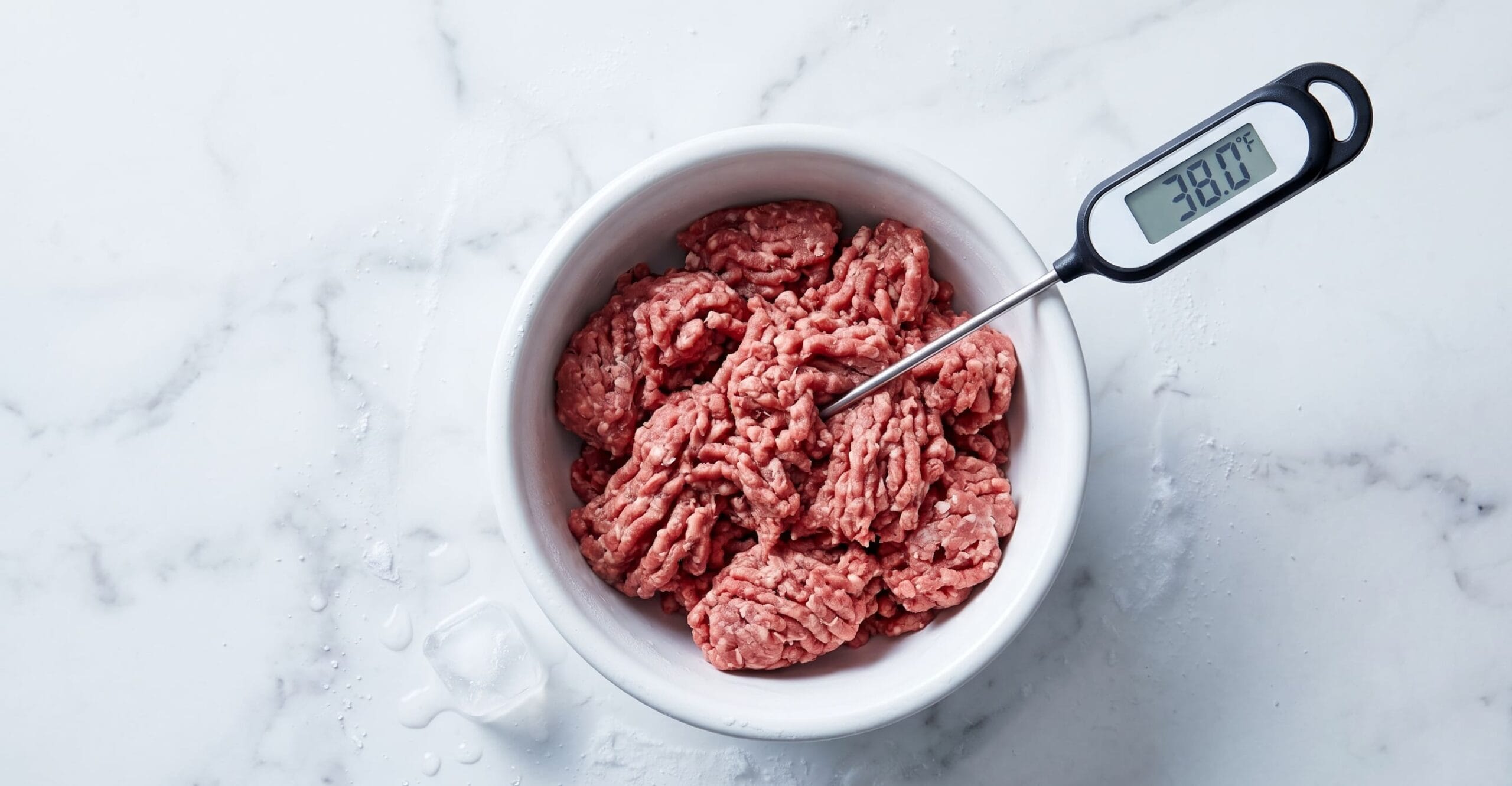
The question sounds simple. The science behind it is not.
Millions of home cooks pull ground beef from the freezer each week, change their dinner plans, and face the same dilemma: do I cook this now, or can I put it back? The answer has genuine public health stakes. Get it wrong and you’re not just ruining texture — you’re risking a bout of foodborne illness that the CDC estimates affects 48 million Americans annually.
So let’s settle it properly, with science, not kitchen folklore.
Is It Actually Safe to Refreeze Thawed Ground Beef?
Yes, refreezing thawed ground beef is safe — but only when it was thawed in the refrigerator at or below 40°F and has remained there for no more than two days. Freezing does not kill bacteria; it halts their activity. As long as the meat never entered the temperature danger zone of 40°F to 140°F, the bacterial load remains low enough that refreezing poses no significant food safety risk. This is the definitive position of the USDA Food Safety and Inspection Service (FSIS) and is corroborated by food microbiologists.
Dr. Benjamin Chapman, professor and food safety specialist at NC State University’s Department of Agricultural and Human Sciences, is unambiguous on this: “Refreezing ground beef is totally safe — as long as the temperature of the beef was maintained in a safe way during the thawing process.” The Kitchn
That phrase — “maintained in a safe way” — is doing enormous work. It is the entire ballgame. The method of thawing is not a minor procedural detail. It is the single variable that determines whether refreezing is responsible food handling or a genuine health hazard.
Why Does Thawing Method Matter So Much?
The thawing method determines whether bacterial populations in the meat remain dormant or explosively multiply. Ground beef thawed inside a refrigerator stays below 40°F throughout the entire process, keeping bacteria in a dormant state. Any thawing method that exposes the meat’s surface to temperatures above 40°F — even briefly — allows pathogens like E. coli O157:H7 and Salmonella to begin replicating. Refreezing that meat locks in a higher bacterial load, which becomes dangerous when thawed again.
Here’s what makes ground beef uniquely vulnerable. Unlike a whole steak, where surface bacteria stay on the surface, grinding distributes contamination throughout the entire mass of meat. When meat is ground, more of the meat is exposed to harmful bacteria. Bacteria multiply rapidly in the “Danger Zone” — temperatures between 40 and 140 degrees F. USDA FSIS
That’s not a technicality. It’s the precise biological reason why ground beef demands tighter handling protocols than other cuts.
Can You Refreeze Beef Thawed in Cold Water or a Microwave?
No. Ground beef thawed via cold water submersion or microwave defrost cannot be safely refrozen in its raw state. Both methods expose portions of the meat to temperatures above 40°F. Microwave thawing can begin cooking outer layers unevenly, creating warm pockets where bacteria multiply before the interior thaws. Cold water thawing is faster and safer than room temperature, but still raises surface temperatures into the danger zone. The USDA is explicit: cook the meat to 160°F first, then cool it properly before refreezing.
Do not refreeze raw ground meat thawed in cold water or in the microwave oven unless you cook it first. This rule is not conservative bureaucratic caution. It reflects a hard microbiology reality: once bacteria have had warmth and time, you cannot un-replicate them by returning the meat to a freezer. USDA FSIS
The cook-then-refreeze protocol remains a legitimate option when plans change mid-thaw. Brown the meat fully, cool it to below 40°F within two hours, then freeze in airtight portions. Quality holds reasonably well for up to four months.
Does Refreezing Ruin the Quality of Ground Beef?
Refreezing does not create a food safety problem in properly handled beef, but it does progressively degrade quality. Each freeze-thaw cycle causes ice crystals to form within the meat’s muscle fibers. Those crystals rupture cell walls, accelerating drip loss and moisture evaporation. The result is ground beef that cooks up drier, with diminished fat distribution and a coarser, less cohesive texture.
“Refreezing the food might result in undesirable changes in texture and some loss of flavor, but it will be safe to eat.” aol
Practically speaking, beef that has been frozen, thawed, and refrozen performs poorly in applications where juiciness matters — burgers, meatballs, hand-formed patties. Use it instead in chili, Bolognese, or stuffed peppers. High-heat, moisture-rich cooking methods mask texture degradation entirely.
Vacuum sealing before the second freeze dramatically reduces ice crystal formation and oxidative rancidity. If you plan to refreeze frequently, invest in a vacuum sealer. It is the single most impactful quality-preservation tool in your cold storage arsenal.
How Long Can Thawed Ground Beef Stay in the Refrigerator Before Refreezing?
Refrigerator-thawed ground beef must be refrozen within one to two days to remain safe. After 48 hours at refrigerator temperatures, spoilage microbes — distinct from pathogens — begin producing off-flavors and detectable odors. The meat may still be technically “safe” in a narrow pathogen sense, but sensory and quality indicators will have declined significantly.
Store ground beef at 40 degrees F or below and use within 2 days, or freeze. This two-day window applies whether you plan to cook or refreeze. The clock starts the moment the meat finishes thawing, not when you open the package. USDA FSIS
Trust your senses as a secondary checkpoint. If your ground beef has been exposed to air and has an off color or smells bad when you open its package, don’t bother refreezing it. The beef has begun to spoil and freezing it again won’t change that. The Kitchn
A gray or brown interior color alone is not a spoilage indicator. Myoglobin oxidation causes this color shift naturally when meat is exposed to limited oxygen — it’s chemistry, not contamination. But a sour or ammonia-like odor, or a slimy surface film, signals real spoilage. Discard immediately.
What Does a Food Scientist Say About Repeated Refreezing?
A food scientist will confirm that repeated freeze-thaw cycles are safe in theory — if temperature control is perfect each time — but inadvisable in practice because quality degradation compounds with each cycle. The safety threshold is binary: the meat either stayed below 40°F throughout thawing, or it didn’t. There is no middle ground on this question.
The USDA recommends only one refreeze cycle for best quality but acknowledges safety depends on temperature control rather than freeze count alone. Snuggy Mom
The operational takeaway for home cooks is straightforward. Portion ground beef before the initial freeze. A one-pound flat-frozen package thaws faster, wastes less, and eliminates the temptation to refreeze a partial amount. Ground beef is safe indefinitely if kept frozen, but will lose quality over time. It is best if used within 4 months. USU
Plan your portions. Freeze in meal-sized increments. Label everything with the freeze date. These three habits eliminate virtually every scenario where refreezing becomes necessary in the first place.
For the definitive government guidance, consult the USDA FSIS Ground Beef and Food Safety page directly at fsis.usda.gov. It remains the most authoritative, continuously updated resource on safe beef handling for home and commercial kitchens.
The question isn’t whether refreezing is always dangerous. It isn’t. The question is whether your thawing method earned you the right to refreeze safely. Refrigerator thawing does. Everything else does not — unless you cook first.